An excavator sprocket is the complete drive wheel assembly. A segment is the replaceable tooth section that bolts onto it. Many equipment owners confuse these two parts because they work together as one unit. This confusion carries real consequences. You might order the wrong component and waste money on unnecessary parts. Worse, you could damage your undercarriage by ignoring the actual worn piece. Understanding the sprocket and segment difference protects your machine and your budget. The sprocket drives the track chain. The segments wear down over time. Each part requires different maintenance attention. Knowing which component needs replacement saves you time and prevents costly repairs down the line.
The excavator sprocket is the complete drive wheel. The segment is the replaceable tooth section that bolts onto it.
Segments save money and time. You can replace only the worn tooth sections instead of the whole wheel.
Inspect your sprocket and segments every 500 to 1,000 hours. Look for hooked teeth, cracks, and loose bolts.
Replace worn segments early. This protects the chain and prevents damage to other undercarriage parts.
Replace the entire sprocket if you find cracks around bolt holes or a damaged hub face.
You will find the sprocket at the rear of the undercarriage. This toothed drive wheel converts hydraulic power from the travel motor into motion. The segment, by contrast, is the replaceable tooth ring bolted to the hub. Large excavators and dozers commonly use segmented designs. You can replace individual segments when they wear out, without changing the complete wheel.
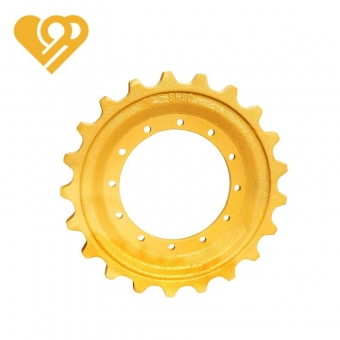
The excavator sprocket is a critical power transmission component in a crawler undercarriage. It receives torque from the final drive and transfers that force to the chain. Its teeth engage the chain bushings and pull the chain around the drive system. This engagement moves the machine forward or backward and controls speed.
Think of the wheel as a body with a toothed outer ring, mounting holes, and connection points. The wheel body provides structural support and carries heavy impact loads. The toothed outer ring distributes meshing force evenly. The mounting holes secure the sprocket of the excavator to the final drive. Every part works together for smooth operation.
You need the pitch between the drive wheel and the chain to match precisely. If the pitch does not align, contact points wear quickly and may fracture. Precision matters in this drive system. A solid wheel may look simple, but its tooth profile and hardness determine service life. The final drive produces high torque at low speed, so the wheel body takes repeated shock loads. Strong material and accurate machining keep the engagement stable in the field. excavator sprockets and segments are available in the corresponding product category.
The segments of the sprocket are removable sections that bolt onto the hub. Each section carries the working face that meshes with the chain. Bolts hold each piece in place, although some designs use welding. The main benefit is modular replacement. You do not need to remove the whole wheel when one section wears. Unbolt the worn piece, install a new one, and return to work.
Manufacturers usually divide the ring into three or more pieces. On large machines, the savings in cost and downtime are substantial. A solid wheel forces you to replace the complete drive wheel. With these bolt-on sections, you replace only the damaged sections and keep the original hub. Early replacement also protects the rest of the undercarriage. A worn piece can wear the hub or damage the chain. Fixing it early prevents larger repairs. Still, check the hub surface and bolt holes during the repair. New pieces cannot cure a cracked hub. Proper tension keeps the chain aligned and reduces stress on these pieces. Always consult the service manual for the correct setting.
Understanding the excavator sprocket and segment begins with a simple rule. The drive wheel is the complete wheel, and the bolt-on section is the replaceable tooth ring. Many undercarriage parts rely on this relationship, from sprockets and chain links to the drive system itself. When you compare excavator sprockets and segments, you compare the whole wheel with its bolt-on sections. This distinction between toothed wheels and their replaceable sections saves time and money. Proper maintenance of both parts keeps the excavator’s track chain moving at full power.
The difference between sprocket and segment comes down to scope. The complete drive wheel turns the track chain. A replaceable tooth section bolts onto that wheel. One-piece sprockets dominate smaller crawler machines. Most mid and large excavators plus dozers use segmented designs. The machine's sprocket and segments form one drive assembly, not two interchangeable options. Understanding this relationship prevents unnecessary part purchases and protects the undercarriage.
A solid one-piece wheel is cast or forged as a single unit. Teeth and hub remain inseparable. To replace it, you remove the track first. Then you disassemble the drive shaft, bearings, coupling, and housing. This design gives mini, small, and medium excavators consistent tooth spacing and secure mounting.
A modular crawler assembly uses three to five separate bolt-on sections. Each section carries the tooth face that meshes with the chain. You can unbolt one worn section and swap it while the shaft and bearings stay in place. That modular layout sustains performance in heavy tracked machinery. The sections engage the chain to transmit motion and power from the drive system, just like a one-piece wheel.
|
Aspect |
One-Piece Wheel |
Modular Segmented Assembly |
|---|---|---|
|
Structure |
Cast as a single unit; teeth and hub inseparable |
Multiple detachable sections bolted to the hub |
|
Replacement |
Requires removing entire track and drive components |
Unbolt only the worn gear ring; shaft and bearings stay in place |
|
Maintenance cost |
Whole wheel replaced once any tooth wears |
Only worn sections replaced, lowering cost |
|
Service life |
Uneven wear can cause premature tooth failure |
Regular gear ring replacement extends life |
Still, bolt-on does not guarantee the track can stay closed while you work. Access, track clearance, stored energy, and removal sequence depend on your specific machine. Qualified maintenance personnel must follow the service procedure, isolation, and support requirements. Forcing the repair can damage the hub and fasteners.
With a one-piece wheel, any wear forces you to replace the complete drive wheel. With a modular design, you replace only the worn gear ring. That repair difference makes the modular route cheaper and faster on large machines. But a cracked hub or damaged mounting face still requires a full wheel replacement. Each replacement section's bolts must be torqued to factory spec; a loose section shifts under load and ruins the hub.
Track chain condition determines how quickly wear appears. A stretched chain no longer matches chain pitch. The bushings ride higher on the tooth faces and create shock loads. Hooked teeth signal that the chain has passed its service limit. One worn part accelerates damage elsewhere. Replace both parts every 3,000–5,000 hours prevents that domino effect. A healthy undercarriage can last 4,000–6,000 hours with proper maintenance.
Inspect often. Daily checks every 8 hours of operation catch loose segments early. Monthly lubrication protects moving parts. An annual comprehensive disassembly reveals hidden cracks. After installing a new drive wheel, monitor it for 50 hours. Field guides also recommend an undercarriage inspection every 500–1,000 hours, and the drive wheel is one of the five key undercarriage systems. Catch wear before the hub suffers. If you need replacement parts, YinTai produces excavator sprockets and segments for Caterpillar, Komatsu, Hitachi, Daewoo, and Volvo machines, with OEM-compatible fits and custom options.
You can spot the warning signs with a few simple checks. Sharp teeth, cracks, and loose parts appear long before total failure. Catching them early protects the track chain and the final drive assembly.
A healthy drive wheel keeps a rounded tooth profile. Heavy use slowly flattens the sprocket's teeth and hooks them backward. Hooked teeth create the shark-fin shape, the most common visual warning that the wheel carries significant usage. Use digital calipers or a track sprocket wear gauge to compare the tooth with new specifications. Proactive replacement at 40–50% wear prevents damage to chain links and final drives.
Also inspect the tooth roots and the bolt holes. Micro-cracks around mounting bolts indicate structural failure under side load. Uneven wear across the tooth faces points to misalignment or final drive concentricity issues. Compare the left and right tracks. Keeping both sides in the same condition simplifies maintenance later.
The bolt-on sections wear faster than the hub because they absorb direct tooth contact. Loose or broken parts often reveal themselves through metallic clinking and visible movement at the joint. Retighten each bolt to factory torque and recheck after the first few hours. Segment wear commonly appears as a hook profile on one side of a tooth set, a sign of poor chain alignment. Replace only the damaged sections instead of the whole wheel, but examine the hub face for cracks first.
The wear patterns of sprockets and segments tell a combined story. A stretched chain elongates the pitch and drives hooking on the tooth faces. Measure pin-to-pin distance across links and compare it with factory specs. Metal debris beneath the machine signals advanced attrition. Replace worn-out sprockets or segments before they damage rollers, idlers, and the final drive. A quick check every 500–1,000 hours keeps the undercarriage healthy. Track chain link products are also relevant when checking for pitch mismatch and wear.
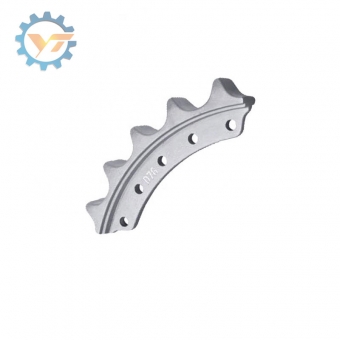
The difference is straightforward. The excavator sprocket is the complete drive wheel. The segment is the replaceable tooth section bolted onto it. You now understand how these parts work together in the undercarriage system.
Regular inspection matters. Check your sprockets and segments for wear signs like hooked teeth or loose bolts. Catching segment wear early protects the excavator sprocket from damage. It also prevents costly repairs to other undercarriage components. A quick check every 500 to 1,000 hours keeps your machine running. Replace worn segments promptly. This simple habit extends the life of your entire track system. Bottom track rollers are another undercarriage component to inspect regularly.
Yes. The excavator sprocket segment bolts onto the hub. Unbolt the worn pieces and install new ones. This saves money and downtime compared to replacing the complete wheel.
Check your track sprocket and segment every 500 to 1,000 hours. Daily visual checks every 8 hours catch loose bolts early. Regular inspection prevents small wear from becoming major damage.
Worn segments damage the chain and sprocket hub. A stretched chain accelerates wear on other undercarriage parts. Early replacement protects your entire drive system.
Replace the complete wheel when you find cracks around bolt holes or a damaged hub face. Worn tooth sections alone do not require full replacement.
get latest company news
Xiamen Yintai Machinery Co., Ltd


 ipv6 network supported
  sales & support 8613696958576
 Email : binochen@yintparts.com