Choosing the right excavator track chain comes down to four things: your machine model, the track link pitch, sprocket compatibility, and the conditions on your job site. The model alone is not enough. Get one wrong and you pay for it. A single mismatched part number, for example, can wear a new track chain in weeks and stall your crew. So measure twice before you order. Pitch is the distance between link pins, and it must match your drive teeth exactly. Yintai builds undercarriage parts that match these specs, so you can fit the chain to the machine rather than guess.
Match the track link pitch to your sprocket teeth to prevent wear and track jumping.
Choose the track chain type based on your job site conditions for longer service life.
Inspect sprockets, idlers, and rollers before installing a new track chain to avoid rapid wear.
Evaluate total cost of ownership, not just price, to save money over time.
Verify your machine model and serial number to ensure the correct track chain assembly.
An excavator track chain consists of four main parts: links, pins, bushings, and track shoes. Each part affects fit and long-term wear. The track link pitch must match the drive sprocket for proper engagement. Incorrect pitch causes vibration, track jumping, and accelerated bushing wear. Pins and bushings wear over time, which increases effective pitch and leads to poor sprocket engagement. Track shoes must match your machine model and working conditions. Wrong shoes reduce traction and can dramatically shorten undercarriage life.
|
Component |
How It Affects Fit |
How It Affects Long-Term Wear |
|---|---|---|
|
Track link pitch |
Must match the drive sprocket; incorrect pitch causes poor engagement and track jumping |
Incorrect pitch increases bushing wear and accelerates sprocket wear |
|
Pins and bushings |
As they wear, effective chain pitch increases, leading to poor engagement |
Common wear includes external bushing wear, internal pin wear, and pitch elongation |
|
Track shoes |
Must be matched to machine model and working conditions |
Wrong shoe selection reduces traction and shortens undercarriage life |
|
Sprocket compatibility |
New chain on a worn sprocket causes abnormal contact |
Sharp or unevenly worn sprocket teeth quickly damage new bushings |
Compatibility requires more than knowing the machine brand. The track chain must also match the sprocket, idler, and roller configuration. The same model can use different undercarriage setups depending on serial number or production year. Single-flange rollers near the sprocket allow track flex, while double-flange rollers provide dual guidance elsewhere. You cannot swap these roller types. OEM configurations must be for safe operation. Explore excavator bottom track rollers to compare undercarriage components and verify the correct configuration for your machine.
Track link pitch is the distance between link pins. General pitch ranges vary by machine size. You must confirm these dimensions before ordering any complete track chain.
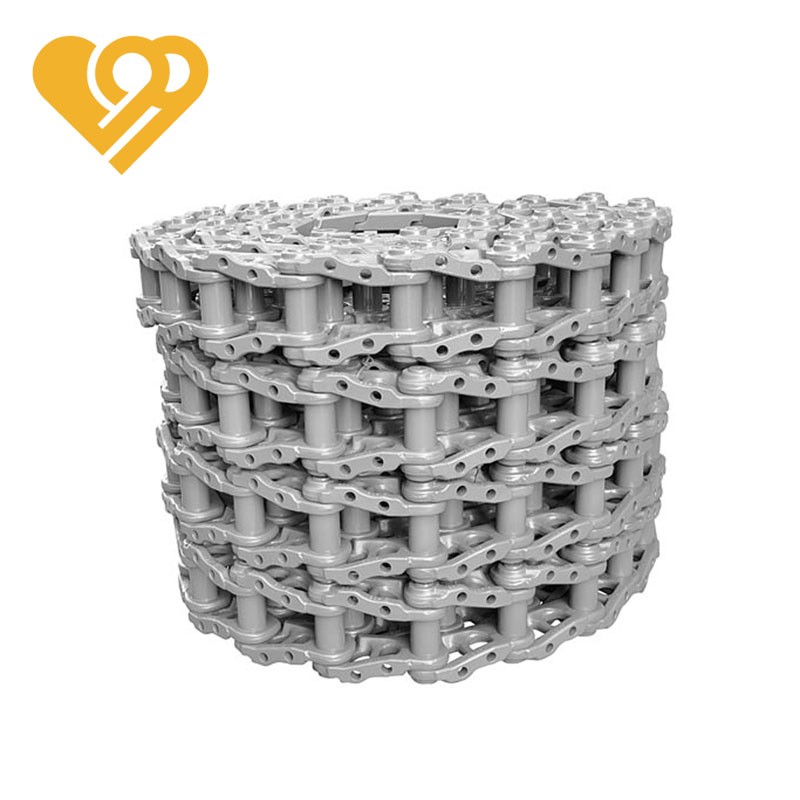
Yintai is one manufacturer of undercarriage parts compatible with brands such as Caterpillar, Komatsu, Hitachi, Daewoo, and Volvo. Yintai produces track chain assemblies and related components using quench-tempering and machining processes. Their parts hold an ISO9001 certificate. When you verify dimensions and pitch, you protect the entire undercarriage system from premature wear. Browse the excavator track chain and track link product range to identify a suitable replacement assembly.
The two main track chain types differ in how they handle internal friction. A dry track chain uses simple metal-to-metal contact between pins and bushings. It has no internal oil chamber and no dust covers. A sealed and lubricated track chain, often called a SALT chain, keeps high-viscosity oil around the pin-and-bushing joint. External dust covers block dirt and debris from entering the lubrication system.
This design difference shapes your maintenance schedule. A dry track chain demands frequent external lubrication and ongoing attention to joint surface condition. A lubricated track chain needs no routine external lubrication. You mainly check seal integrity during service intervals. In abrasive or high-utilization conditions, the dry design requires more frequent maintenance attention.
Service life follows the same pattern. A dry track chain wears faster because metal-on-metal friction and abrasive particles attack the joint directly. Internal wear causes pitch stretch, which is the primary failure mode. A lubricated track chain reduces friction with an oil film, so internal wear stays very low. Its primary failure mode shifts to external wear or seal failure. This design often delivers significantly longer service life and lower long-term maintenance cost.
|
Aspect |
Dry-Type Track Chain |
Lubricated-Type Track Chain |
|---|---|---|
|
Sealing system |
No internal lubrication; metal-to-metal contact |
Internal oil; dust covers block debris |
|
Maintenance focus |
Frequent external lubrication; joint condition checks |
Periodic seal integrity checks |
|
Primary failure mode |
Internal wear (pitch stretch) |
External wear or seal failure |
|
Service life |
Shorter; limited by rapid pitch elongation |
Significantly longer; reduced downtime |
Your operating environment dictates the appropriate crawler chain type and shoe configuration. Soil conditions, slope, and material abrasiveness all play a role. Loose fine sand demands flotation-oriented tracks with a wide footprint. Cohesive clay becomes sticky when wet and concrete-hard when dry, placing immense strain on the undercarriage. Solid rock shifts operations into a high-impact, high-wear regime.
Track shoe selection follows the ground. Narrow tracks deliver higher ground-contact pressure to bite into compacted soil and hard rock. Wide flotation tracks spread weight and prevent sinking in soft mud. Rock track shoes use thickened steel plates and reinforced edges to resist abrasion and impact. For mixed surfaces, steel tracks with bolt-on rubber or polyurethane pads offer protection and stability. Compare available excavator track shoe assemblies when selecting a shoe configuration for your machine and job site.
Slope work adds another layer. Set chain tension tighter on steep or muddy terrain, just tight enough to prevent the sprocket from jumping. Over-tightening accelerates wear through higher pin bearing loads. Work up or down a slope whenever possible. Cross-slope work creates stress in the tracks and shortens component life.
Material strength and heat treatment separate durable chains from weak ones. Look for 35MnB manganese steel, which withstands repeated tensile loads and impact forces. Deep induction hardening on working surfaces resists abrasive wear while maintaining toughness. A target hardness range of HRC 52–58 balances wear resistance with sufficient toughness for heavy-duty operation.
|
Ground Condition |
Recommended Track Feature |
|---|---|
|
Rocky, abrasive jobsites |
Steel tracks with heavy-duty grousers |
|
Soft mud or muskeg |
Wide flotation tracks |
|
Compacted soil or hard rock |
Narrow tracks for higher contact pressure |
|
Steep slopes |
Aggressive single or triple grousers |
Start with the machine itself, not a seller listing. Read the serial number directly from the identification plate, because components may have been changed since the machine left the factory. Record the brand, the full model and suffix, and the original part number on the old chain. Confirm whether your undercarriage is steel or rubber, and note the roller layout on each side. A readable number on an old part is a clue to investigate, not proof of fitment.
The official parts book matched to the machine serial number is the safer source of truth than a cross-reference or a number remembered from another machine.
Sprocket compatibility decides whether your new chain seats correctly. Check the tooth spacing, the bushing outside diameter, and the track link pitch together. A correct width with the wrong pitch or link count will not fit, because pitch controls how the drive sprocket indexes the chain. Inspect every tooth pocket for rounding, mushrooming, or chips. A new track chain on hooked teeth wears fast, and a worn chain damages a new sprocket. Confirm the complete track chain assembly number against your machine model before you commit. You can also inspect excavator sprockets and segments when checking compatibility with a replacement chain.
|
Verification Point |
What to Confirm |
|---|---|
|
Machine identity |
Full model and serial number (PIN) |
|
OEM catalog listing |
Part callout and OEM part number |
|
Roller location |
Bottom roller versus carrier roller |
|
Flange configuration |
Single, double, or other |
|
Mounting interface |
Bolt-hole pattern and mounting face |
Clean the drive lugs before you measure anything. Use calipers or a stiff ruler, and measure center-to-center between adjacent lugs, never edge-to-edge. On a worn track, a single interval can carry a small error, so use the 10-lug technique: measure from the center of the first lug to the center of the eleventh, then divide by 10. Repeat the reading at several points and average them.
Record three numbers: width in millimeters, track pitch in millimeters, and total link count. These dimensions identify the correct replacement excavator track links. Check the molded size on the inside surface of the current chain first. If no marking exists, measure and count. Write every value on the order so your supplier confirms against your evidence.
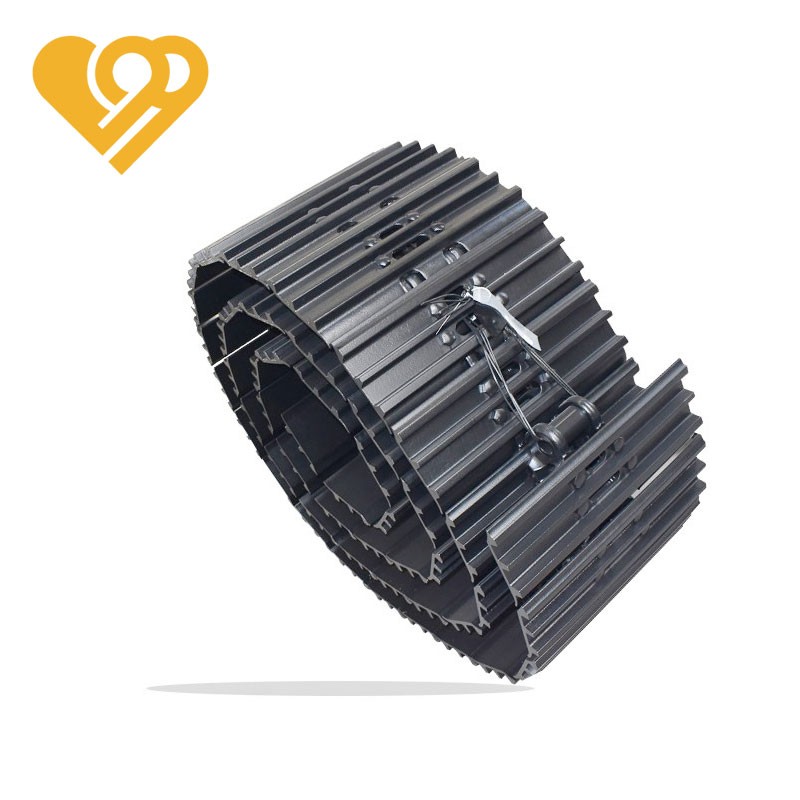
Installation orientation matters as much as measurement. The idler sits at the front and the sprocket at the rear. Mount the wide side of each track link on the sprocket side and the narrow side on the idler side. When the machine moves forward, the wide side should contact the ground first. For shoes with a square bolt hole pattern, position the angled strip on the wide side to block sand entry. Finally, set tension using your machine's own specification. Measure sag at the specified location, add grease to tighten, and release pressure per the manual if the chain is too tight. No universal tension number exists for a crawler track chain, so never borrow one from another model.
Worn undercarriage parts damage a new track chain fast. Watch for three key wear signs: link elongation, pin and bushing wear, and excessive track sag. These signals tell you the chain has reached its service limit. If you install a new track chain on worn sprockets, the old teeth cut into fresh bushings. The chain then wears out in weeks instead of months.
Check your sprocket, idler, and rollers before installation. A worn idler or sprocket pushes the track chain out of alignment. This misalignment causes side wear on links and bushings. Excessive sag from a loose chain worsens sprocket engagement and raises the risk of derailing. Over-tightening increases friction and mechanical load through pins, bushings, and the drive sprocket. Correct tension per your machine manual protects the entire undercarriage.
The cheapest excavator track link often costs more over time. A low-cost chain may save money upfront but deliver shorter replacement cycles and more downtime. Compare total cost of ownership instead.
Evaluate your track link supplier on durability and support. ISO 9001 certification shows a manufacturer maintains systematic quality control. This helps you distinguish genuine components from counterfeits. Confirm track pitch, link count, shoe width, machine model, and working conditions before ordering. A reliable supplier helps you verify these dimensions and provides a complete track chain assembly that fits your serial number. Practical fit matters most. Quality and support protect your investment far better than a low price.
Confirm your machine model and original part number first. Next, verify track link pitch and sprocket compatibility. Then choose the right track chain type for your job site. Finally, inspect the entire undercarriage before installation.
The correct track chain prevents premature wear, reduces downtime, lowers long-term operating costs. Measure the pitch once more against the old chain. A worn idler or drive component can destroy a new track chain quickly. Yintai manufactures a track chain assembly matching your exact specifications. Their track link components use quench-tempering for durability.
Careful selection keeps your excavator productive. It also protects the entire undercarriage system.
Check your machine serial number and original part number first. Then verify the track link pitch against your sprocket teeth. A correct width with the wrong measurement will not fit. Yintai matches parts to your exact specifications.
A sealed design keeps oil around the pin and bushing joint. Dust covers block debris. A lubricated design needs no routine external lubrication. You mainly check seal integrity during service. Both reduce internal wear compared to dry chains.
Clean the drive lugs first. Measure center-to-center between adjacent lugs, never edge-to-edge. Use the 10-lug technique for accuracy. Record width, pitch, and total link count. Write every value on your order.
Worn sprockets, idlers, and rollers damage a new chain fast. Old teeth cut into fresh bushings. The chain then wears out in weeks instead of months. Yintai manufactures durable undercarriage parts using quench-tempering processes.
No. The same model can use different undercarriage setups depending on serial number or production year. You must match the assembly to your specific machine. Yintai produces compatible parts for major brands.
get latest company news
Xiamen Yintai Machinery Co., Ltd


 ipv6 network supported
  sales & support 8613696958576
 Email : binochen@yintparts.com