sales & support 8613696958576
 Email : binochen@yintparts.com



Key Takeaways
-
Lubricate track rollers on schedule with the correct grease to prevent metal-on-metal wear.
-
Keep seals clean and replace damaged ones early to stop dirt and water from causing damage.
-
Maintain proper track tension and alignment to avoid shock loads and uneven wear.
-
Avoid impact overloads and match attachments to the job to reduce stress on rollers.
-
Inspect the undercarriage regularly and replace worn parts on time to prevent costly failures.
Poor Lubrication Accelerates Excavator Track Roller Wear
Grease performs a critical job inside every track roller. It creates a protective film that separates moving metal surfaces. When that film disappears, damage begins immediately.
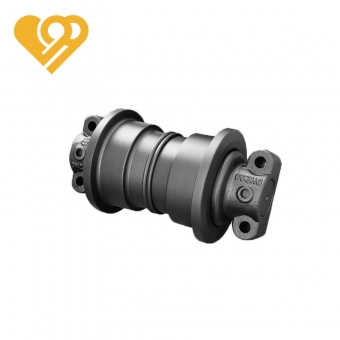
Metal-on-Metal Friction
Insufficient lubrication removes the protective lubricant film between moving metal surfaces in the track roller assembly. Without this film, the bearing surfaces directly touch, resulting in metal-on-metal contact. This direct contact under load generates friction and heat, which can progress to seizure or galling of the roller bearings.
The failure sequence unfolds in a predictable pattern:
-
Bearings inside the track roller lose lubrication.
-
The unlubricated bearings lock up instead of rolling smoothly.
-
The locked roller drags along the moving track, creating severe friction.
-
This friction produces intense heat that damages track link counterbores and raises operating costs.
Pin galling occurs when the lubrication film between the pin and bushing fails under operating load, allowing direct metal-to-metal contact inside the joint assembly. Once lubrication breaks down, scoring marks gradually develop along the pin surface due to repeated sliding contact under extreme pressure. Early warning signs include stiff or jerky chain movement, increased rolling resistance, and unusual squealing or grinding noises from the track chain. Continued operation under metal-to-metal contact rapidly increases internal wear throughout the pin and bushing system.
Operators who notice these symptoms should stop the machine and inspect the undercarriage immediately. Continued operation accelerates damage to every connected component.
Overheating and Seal Failure
Mechanical resistance during rotation creates friction-induced heat inside a track roller. Smoother rotation is important because it minimizes friction and heat generation. The roller must dissipate this heat. Without effective heat dissipation, the temperature rises and causes material degradation and eventual failure.
Seals must prevent grease leakage under varying pressures and temperatures without degrading. Elevated temperatures can break down the sealing material. Incompatible seal-lubricant combinations can also chemically degrade the seal. When the seal material degrades and can no longer contain the internal lubricant, grease escapes from the roller, causing leakage. Oil leakage is identified as the most common cause of premature track roller failure, making it the final consequence of heat-induced seal degradation.
Once grease escapes, debris enters freely. The roller then suffers from both lubrication starvation and contamination at the same time. This combination destroys the roller quickly and spreads damage to the track chain and other undercarriage parts.
Preventive action is straightforward. Grease excavator track rollers on the manufacturer's recommended schedule. Use the correct lubricant type for the application and climate. Check seals during every service interval. Replace damaged seals before they allow grease to escape. These simple steps prevent premature undercarriage wear and extend the life of every track roller in the fleet.
Contamination from Dirt and Water
Seals form the first line of defense for every excavator track roller. These seals keep grease inside and abrasive particles outside. Once a seal wears or tears, that defense collapses.
Debris Buildup in the Undercarriage
Dust and sand act as abrasive materials. A worn or damaged seal can no longer keep these particles out. Water enters the track roller assembly through the same failed seal. Mud and grit then mix with residual oil inside the roller cavity. This mixture forms a grinding paste that rotation spreads across the bearing and shaft surfaces.
Packed mud around a bottom track roller presses against the seal guard and pushes the seal lip inward. The damaged seal allows lubricant to leak out and silt to enter the bearing cavity. Contaminated bearings overheat and seize. The roller shell then wears through rapidly.
A clean undercarriage minimizes friction and wear on moving parts. Rollers and bearings stay in better condition when operators remove packed debris, because abrasive buildup accelerates wear and tear. Regular cleaning preserves the roller shell and extends component service life.
Grinding Wear and Destroyed Seals
Fine abrasive particles such as fine sand, silt, and crushed quartz pack inside the undercarriage. As the track rotates, these materials act as an industrial grinding paste between sprocket teeth, rollers, and track links. The continuous grinding action erodes protective rubber coatings and creates cracks. Water penetrates the cracks, reaches internal steel cords, and causes rust expansion. Rust expansion destroys the rubber-to-steel bond, leading to blistering and sudden track failure.
Fine sand and grit can penetrate the seal interface and progressively lap away the polished sealing surfaces until they no longer seal effectively. Dusty and sandy environments cause premature track roller failure. Fine abrasive sands, such as those found in the Australian Outback or the Arabian Peninsula, are especially destructive. Wet and muddy conditions add water that promotes corrosion. In severe cases, a crawler track roller that could have lasted another thousand hours may be destroyed in under a hundred hours once contaminated.
Preventive action protects every heavy duty track roller. Keep seals clean during routine service. Wash the undercarriage regularly to remove packed debris. Replace damaged seals early, before contaminants reach the bearings. These habits reduce wear and delay the need for track roller replacement. Explore excavator track chain links when checking related undercarriage components.
Improper Track Tension and Misalignment
Track tension directly controls how much stress reaches every roller in the undercarriage. Operators who ignore this adjustment pay for it through accelerated parts failure.
Loose vs. Over-Tight Tracks
Incorrect track tension creates two opposite but equally destructive problems. Loose chains allow the track to slap against the roller surfaces during operation. Each slap delivers a shock load that hammers the roller shell and bearing assembly. Over-tightened chains place extreme pressure on the track rollers, idlers, and sprockets. This excessive pressure accelerates wear on these undercarriage components and raises the operating temperature of the entire system.
|
Track Tension Condition |
Effect on Rollers / Undercarriage |
Result |
|---|---|---|
|
Over-tightened chains |
Excessive friction between bushings and sprocket teeth; extreme pressure on rollers |
Accelerated and premature wear |
|
Loose chains |
Shock loading and misalignment during operation |
Premature wear of undercarriage components |
Both conditions shorten the service life of every track roller in the assembly. Over-tightened tracks also cause components to wear unevenly. The track then no longer runs straight, which increases the likelihood of derailment on uneven terrain. A damaged excavator track roller from incorrect track tension often shows flat spots or cracked shells.
Bent Components and Worn Bushings
Misalignment of track rollers, idlers, or sprockets forces uneven weight distribution across the undercarriage. One side of the roller carries more load than the other. That side wears faster. The roller eventually flattens on one edge. A flattened track roller does not rotate smoothly. Instead, it hammers against each chain link as the track moves. This impact damage compounds with every rotation and spreads to the bushings and links.
Deformed carrier rollers make the track run unsteadily. The chain wanders side to side instead of tracking straight. This wandering motion accelerates wear of other parts, including the track rollers themselves. A non-rotating roller drags along the chain and creates flat spots within hours of operation. The resulting track roller damage often requires complete track roller replacement rather than simple repair. Inspect excavator track carrier rollers for wear and alignment issues.
Worn bushings contribute to the same problem. When bushings wear, the chain pitch lengthens. The roller then contacts the chain at the wrong point. This mismatch concentrates force on a small area of the roller surface. That area fails first, and the rest of the roller follows.
Preventive action centers on two habits. First, maintain proper tension by checking the track regularly and correctly adjusting track tension according to the manufacturer's specification. Second, align undercarriage parts during every major service. Inspect idlers, sprockets, and carrier rollers for bending or uneven wear. Replace worn bushings before they change the chain pitch. These steps prevent damage to rollers and idlers and protect the entire undercarriage from premature failure.
Impact, Overload, and Rough Terrain
Long-term overload work and frequent high-load operations cause rapid excavator track roller wear. Every extra ton of load transfers more force through the undercarriage. The rollers absorb that force with each rotation. Over time, this constant stress breaks down bearing surfaces and deforms roller shells.
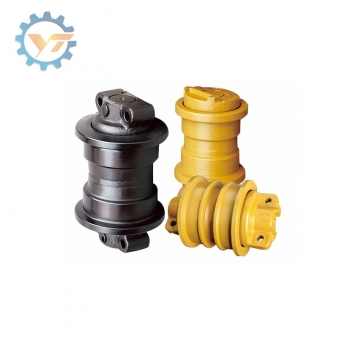
Heavy Loads and Attachments
Dropping loads sends a shock wave through the entire undercarriage. Each impact hammers the track roller against the chain. The roller shell develops flat spots and cracks. Heavy attachments make this worse. A larger bucket or breaker adds weight to the front of the machine. That weight shifts the center of gravity forward. The front rollers then carry more load than they were designed to handle. This overloading of the machine shortens the lifespan of rollers and idlers across the fleet.
Operators should avoid impact overloads whenever possible. They should match attachments to the job. A smaller bucket on a compact machine prevents unnecessary stress. Fleet managers should also choose durable rollers for harsh conditions. YINTAI manufactures quench-tempered, precision-machined track rollers designed for demanding job site conditions. Explore YINTAI undercarriage replacement parts for related equipment applications.
Uneven Ground and Stone Environments
Rocky and abrasive terrain embeds dirt and rocks into rollers under high pressure. This accelerates wear and increases frictional heat and contamination if operators do not clean the undercarriage. Uneven, off-center roller impacts on rough ground create scalloping on track links. Debris impact can produce cracks or pitting. These conditions lead to faster roller and chain deterioration.
|
Terrain Condition |
Effect on Track Roller |
Damage-Rate Implication vs Flat-Soil Operation |
|---|---|---|
|
Abrasive ground (rock, sand) |
Excessive wear, flange damage, uneven wear, flat spots |
Higher damage rate; replace roller when diameter wears >10–15% |
|
Extremely rough terrain |
Heavy impact, roller deformation, cracks, bent axle, or cracked shell |
Significantly higher impact-damage rate; replace damaged roller immediately |
Compared with normal balanced operation on flat soil, these rocky and uneven conditions cause excessive wear, deformation, cracks, and higher damage rates. Proper track tension and alignment limit this extra damage. Operators should avoid continuous harsh-ground operation without protection. They should also inspect excavator undercarriage parts after working in stone environments. Early detection prevents premature failure and costly damage to the track rollers.
Maintenance Neglect and Wear Symptoms in Excavator Tracks
Operators who skip routine service intervals invite premature excavator track roller failure. Small oversights compound into major repairs. A missed grease fitting here and a delayed inspection there add up to seized bearings, damaged seals, and costly downtime.
Skipped Greasing and Stuck Seals
Grease keeps every track roller alive. When operators skip greasing, the lubricating film disappears. Metal surfaces then contact each other directly under heavy loads. This contact generates heat, accelerates wear, and eventually causes catastrophic failure.
Skipped greasing multiplies wear speed through a predictable chain of events. Missing grease points or using the wrong lubricant leads to failed bearings and seized rollers. Track rollers run constantly under heavy loads, so skipped greasing removes the protective film and causes metal-on-metal contact. Under-lubrication makes bearings run dry. Over-lubrication can also damage seals. Correct grease volume is necessary to keep seals and bearings alive.
Track-roller inspection links oil stains at the roller ends to a failed seal and a bearing running dry. Seized or flat-spotted rollers require immediate replacement. In the undercarriage cascade, worn bushings stretch chain pitch, misalign the track, and side-load the rollers; side-loading causes seals to fail, oil to leak, bearings to run dry, and multiple rollers to fail together.
The consequences of improper maintenance extend beyond the roller itself. A real example: a dozer was skipped for two weeks because it "looked fine," resulting in $8,000 in roller replacements and three days of downtime. This case shows how quickly neglect translates into lost productivity and repair costs.
Worn track rollers lead to poor track alignment. When rollers wear unevenly or seize, the chain no longer runs straight. This misalignment speeds up deterioration of links, bushings, and sprockets. Worn bushings stretch chain pitch, which misaligns the track and side-loads the rollers. Side-loading causes seals to fail, oil to leak, and bearings to run dry. Multiple rollers then fail together. The entire undercarriage deteriorates as one component after another reaches its limit.
Spotting Wear Symptoms Early
Early detection saves money. Operators who recognize wear symptoms in excavator tracks can replace damaged parts before failure spreads. Daily visual inspections and weekly audio checks prevent grinding and squeaking from escalating into major breakdowns.
Wear symptoms in excavator tracks include several clear indicators. Uneven roller surfaces, flat spots, leaking seals, noisy tracks, and loose chain tension all signal problems. Each symptom points to a specific failure mode.
Visual checks reveal oil streaks on the roller body or track frame near the roller. A damp or wet appearance around the seal area indicates seal failure. The roller is now living on borrowed time. After moving the machine, operators should carefully run a hand over the surface of the rollers with the machine off and secured. Any noticeable flat area indicates the roller has been seized at some point. Excessive side-to-side movement when wiggling the rollers by hand can indicate internal bearing failure.
Audio clues matter just as much. Grinding noise typically signifies severe lack of lubrication and metal-on-metal contact, such as destroyed bearings or a foreign object wedged between the rotating idler and stationary yoke. High-pitched squealing often points to high-speed metal-on-metal friction, such as a bearing beginning to seize or a failed seal allowing hardened metal seal faces to run dry against each other. Intermittent popping or banging can be caused by a broken or cracked bearing race, where rolling elements catch on the fractured edge with each revolution.
Worn idler treads, loose track tension, or stretched chains exceeding 2% pitch elongation cause clicks during engagement. Bearing rebuilds work for minor squeaks, but grinding needs full front idler replacement.
Replacement intervals for undercarriage parts are not fixed. They depend on terrain, working hours, maintenance, and machine operation. Neglecting regular cleaning allows hardened mud, wet clay, and stones to act as abrasives that damage roller seals and create pressure points. Skipping daily visual inspections and periodic measurements (such as flange height and track stretch every 250–500 hours) allows wear to progress undetected. Continuing to operate with highly worn components accelerates deterioration of the rest of the undercarriage, increases fuel consumption, reduces stability, and raises the risk of costly breakdowns. Failing to clean the undercarriage regularly significantly reduces component lifespan. Skipped undercarriage maintenance intervals are directly linked to accelerated wear and, consequently, more frequent track roller replacement.
Preventive action protects the entire undercarriage. Inspect regularly and replace track rollers at the right time to protect the track chain and other undercarriage components. Operators should check for leaks daily, listen for unusual noises weekly, and measure wear indicators on schedule. When a heavy duty track roller shows signs of failure, replace it before damage spreads. This approach protects the crawler track roller, bottom track roller, and every other component in the track roller assembly. Timely track roller replacement costs far less than rebuilding the entire undercarriage after a cascade failure. For compatible replacement options, review YINTAI undercarriage products.
Poor lubrication, contamination, wrong track tension, misalignment, impact overload, and skipped maintenance are the major causes of excavator track roller failure. Each one accelerates wear, and each one is preventable.
Operators can follow a simple checklist for preventing track roller failure:
-
Lubricate excavator track rollers on schedule with the correct grease.
-
Keep seals clean and replace damaged ones early.
-
Maintain correct track tension and align undercarriage parts.
-
Avoid impact overloads and match attachments to the job.
-
Inspect the undercarriage regularly and replace worn excavator undercarriage parts on time.
Quality replacement parts such as YINTAI components extend the lifespan of rollers and idlers and reduce track roller replacement costs. Consistent maintenance protects the whole undercarriage and keeps the machine productive.
FAQ
How often should operators replace an excavator track roller?
Replacement intervals depend on terrain, working hours, and maintenance quality. Operators should measure wear indicators every 250 to 500 hours. A roller needs replacement when its diameter wears beyond 10 to 15 percent. Regular inspection prevents a worn roller from damaging the track chain and other undercarriage components.
What are the early warning signs of a failing bottom track roller?
Oil streaks near the seal, flat spots on the roller surface, and unusual grinding or squealing noises all signal failure. Excessive side-to-side movement when wiggling the roller by hand indicates internal bearing damage. Operators who catch these symptoms early avoid costly track roller replacement and downtime.
Can proper track tension extend roller life?
Yes. Correct track tension prevents two destructive conditions. Loose chains slap against rollers and create shock loads. Over-tight chains overload bearings and accelerate wear. Operators should check tension regularly and adjust it to the manufacturer's specification. This single habit protects every excavator roller in the assembly.
Does undercarriage cleaning really matter for roller lifespan?
Absolutely. Packed mud and debris press against seals and push them inward. Contaminants then enter the bearing cavity and form a grinding paste. Regular washing removes abrasive buildup and preserves seal integrity. Clean excavator tracks run cooler and last longer, which reduces maintenance costs across the fleet.
Is it cheaper to replace rollers early or wait until failure?
Early replacement costs far less. A seized crawler track roller damages links, bushings, and sprockets as it drags along the chain. Rebuilding the entire undercarriage after a cascade failure costs many times more than installing a new heavy duty track roller at the first sign of wear.
 ipv6 network supported