Ordering the correct excavator spare part is not always as simple as providing the machine model. Even when two excavators come from the same manufacturer and share a similar appearance, their replacement components may have different dimensions, mounting positions, or part numbers. Choosing an incompatible part can lead to installation problems, unnecessary downtime, and additional purchasing costs.
So, what information is needed to identify the correct excavator spare part number? The most reliable starting point is the original OEM part number, machine model, and serial number. If the original part number is unavailable, buyers can also use product photographs, physical dimensions, installation details, and existing component markings to help identify the correct replacement.
For equipment owners, maintenance contractors, and international spare parts distributors, preparing the right technical information before contacting a supplier makes the identification process faster and more accurate. This guide explains what information to collect and how to verify replacement excavator parts before ordering.
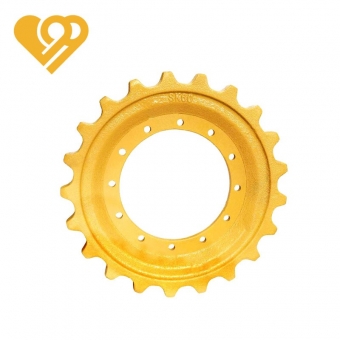
Excavator drive sprocket used in crawler undercarriage systems.
An excavator spare part number is a reference used to identify a specific component within a manufacturer's parts system. It helps buyers, equipment dealers, and maintenance technicians distinguish between parts that may look similar but have different technical specifications.
For example, two bottom track rollers may have similar external shapes, but differences in flange configuration, mounting dimensions, shaft structure, or internal design can make them unsuitable for the same machine.
Using the correct part number helps buyers:
For distributors handling multiple excavator brands and models, maintaining accurate part number records is particularly important. A small identification mistake can affect an entire purchasing batch.
When identifying a replacement excavator component, buyers should collect several pieces of information instead of relying on one reference alone. The following details provide a more complete picture of the required part.
Machine Brand and Model
Start by identifying the excavator manufacturer and exact machine model. Common equipment brands include Caterpillar, Komatsu, Hitachi, Volvo, and other construction machinery manufacturers.
Do not provide only a general description such as a 20-ton excavator. Different models within the same operating weight class can have different undercarriage dimensions and component configurations.
Machine Serial Number
The serial number, also known as the product identification number (PIN) on some machines, helps narrow down the correct equipment version. Manufacturers may change component designs during production, meaning that machines with the same model designation can sometimes require different replacement parts.
Providing the complete serial number allows the supplier or authorized parts dealer to check whether the component belongs to a specific production range.
Original OEM Part Number
If the old component is still available, look for the original part number printed, stamped, engraved, or attached to its surface. This is often one of the most useful references for replacement identification.
Make sure the number is recorded correctly. Similar-looking characters, missing digits, and suffix variations can lead to incorrect identification.
Component Name and Installation Position
Describe the part clearly and explain where it is installed. For example, specify whether the required component is a bottom track roller, carrier roller, front idler, drive sprocket, or track chain assembly.
Also clarify whether it is installed on the left or right side, where applicable, and whether the required product is an individual component or a complete assembly.

Front idler assemblies require accurate model and mounting specification matching.
Sometimes the original part number is no longer readable because of corrosion, wear, repainting, or previous repairs. In other cases, buyers receive an old component without its original packaging or documentation.
When this happens, several alternative identification methods can help.
Use clear product photographs. Take pictures of the component from different angles. Include the front, back, side, mounting area, connection points, and any visible markings. A ruler or measuring tape in the photograph can also provide a useful size reference.
Record the critical dimensions. Measure the overall length, width, height, mounting hole diameter, hole spacing, shaft diameter, and other relevant dimensions. The required measurements depend on the component type.
Check the installation structure. Examine how the old component connects to the machine. Mounting brackets, bolt positions, shaft arrangements, and connecting structures can help distinguish between similar replacement parts.
Compare the old component with technical drawings. If the original drawings or parts catalog are available, compare the physical dimensions and structural details with the documented specifications.
Provide a physical sample when possible. For customized or difficult-to-identify components, sending an existing sample to the manufacturer can provide a more reliable reference for checking dimensions and structure.
It is important to remember that photographs alone cannot always confirm compatibility. A component may look almost identical to the original while having different internal dimensions or installation specifications.
Different excavator spare parts have different identification requirements. Buyers should focus on the dimensions and technical features that directly affect installation and operating performance.
Track Chain and Track Link
For replacement track chains, the machine model and OEM part number should be checked together with track pitch, total link count, pin and bushing dimensions, and master link configuration.
For individual track links, also verify the link structure, connecting dimensions, and compatibility with the existing chain assembly.
Buyers can review the excavator and bulldozer track chain product range to understand the different chain and track link applications available from Yintparts.
Bottom Track Roller and Carrier Roller
When identifying rollers, check the overall diameter, roller width, flange configuration, shaft dimensions, mounting structure, and relevant installation measurements.
The number and arrangement of flanges are particularly important because different roller designs are used for different undercarriage configurations.
For replacement requirements, compare the old component with the bottom track roller product category and confirm the applicable machine model before ordering.
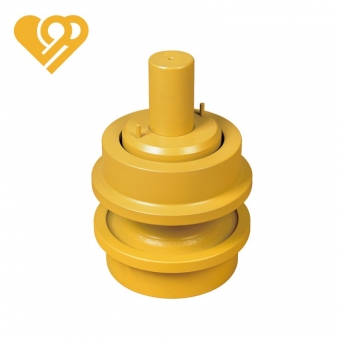
Bottom track roller assembly for crawler construction machinery.
Front Idler Assembly
For front idlers, important identification details include the outer diameter, wheel width, shaft dimensions, mounting arrangement, and assembly structure. Buyers should also check whether the required product is a complete idler assembly or an individual replacement component.
Yintparts offers different models of excavator and bulldozer front idler assemblies, including products designed for specific machine applications.
Drive Sprocket and Segment
For drive sprockets, verify the number of teeth, pitch compatibility, mounting hole arrangement, center dimensions, and overall diameter. The sprocket must match the corresponding track chain to ensure proper engagement.
When replacing a sprocket, checking the condition and specifications of the existing track chain is also important.
Bucket Teeth and Ground Engaging Tools
For bucket teeth, adapters, cutting edges, and side cutters, check the component profile, dimensions, mounting system, pin or bolt arrangement, and material requirements.
Similar-looking bucket teeth may use different adapter systems or locking structures, so visual appearance alone is not sufficient.
Buyers can explore the ground engaging tools product category to compare different wear parts for excavators and bulldozers.
Photographs and technical drawings are especially useful when the original OEM part number cannot be confirmed. However, they should be prepared in a way that allows the supplier to compare the actual component with the required specifications.
For product photographs, try to include:
Technical drawings should include the overall dimensions, critical installation measurements, tolerances where necessary, and material or treatment requirements if these are relevant to the replacement part.
For example, when identifying an excavator bucket, a photograph of the complete bucket is helpful, but additional information such as bucket width, capacity, pin diameter, center distance, and mounting structure makes identification much more accurate.

Excavator bucket configuration and tooth arrangement are important identification references.
Yintparts also provides customized manufacturing according to customer samples, designs, and technical drawings. This is useful when buyers need replacement parts that cannot be identified through a standard product reference alone.
Even experienced purchasing teams can make identification mistakes when technical information is incomplete. The following issues are worth checking before confirming an order.
Using only the excavator model. A machine model is a useful starting point, but different production versions may have different component configurations. Always check the serial number or OEM reference when available.
Assuming similar-looking parts are interchangeable. Two components may share the same external appearance but differ in mounting dimensions, material specifications, or internal structure.
Ignoring part number suffixes. Some manufacturers use suffixes to distinguish between product revisions or different configurations. Do not remove or overlook these characters when recording the original reference.
Measuring only the overall dimensions. Total length and width are not enough for many undercarriage components. Critical details such as hole spacing, shaft diameter, flange dimensions, and mounting positions may determine whether a part fits.
Failing to distinguish an individual part from an assembly. A buyer may request a complete front idler assembly while the supplier quotes only the wheel component. Always clarify the exact supply scope.
Not confirming the final specifications before production. For customized orders, all critical dimensions, drawings, material requirements, and identification references should be approved before manufacturing begins.
Identifying the correct replacement part requires both product knowledge and manufacturing experience. For overseas buyers who may not have access to the original equipment manufacturer's parts catalog, working with an experienced spare parts manufacturer can simplify the process.
Xiamen Yintai Machinery Co., Ltd. (Yintparts) specializes in excavator and bulldozer undercarriage components and ground engaging tools. Its product range includes track chains, track shoes, track rollers, carrier rollers, front idlers, sprockets, bucket teeth, adapters, blades, and other related components.
With manufacturing experience and professional machining and heat treatment processes, Yintparts supports customers looking for replacement components for different construction machinery applications.
The company provides OEM part number guidance and can evaluate customized requirements according to customer samples, designs, and technical drawings. Buyers who do not have a complete part number can provide the available machine information and component references for further confirmation.
For example, customers looking for an excavator bucket can review the excavator bucket product range and provide the required bucket dimensions, mounting information, and working application.
To improve identification accuracy, buyers should prepare the following information when contacting Yintparts:
Providing more complete information allows the technical team to evaluate the application more efficiently and helps reduce unnecessary communication during the quotation and production process.
Before sending a quotation request, buyers should organize the available information into a simple identification record. This makes it easier for the supplier to understand the requirements and provide a more accurate product recommendation.
A practical checklist includes:
For distributors purchasing multiple excavator spare parts, it is also useful to create a product identification sheet containing the part number, machine application, product description, dimensions, and approved reference photographs. This helps maintain consistent purchasing records and makes future reordering easier.
Identifying the correct excavator spare part number starts with accurate machine information and a clear understanding of the component's technical specifications. When the original number is missing, combining photographs, physical measurements, installation details, and technical drawings provides a practical alternative.
Yintparts supports OEM part number guidance and customized excavator and bulldozer spare parts manufacturing. Contact the team with your machine model, existing part information, photographs, or drawings to discuss the appropriate replacement solution.
What information is needed to identify the correct excavator spare part number?
The most useful information includes the excavator brand, exact model, machine serial number, original OEM part number, component name, installation position, and relevant dimensions. Clear photographs and technical drawings can also help confirm the correct replacement.
Can I identify an excavator spare part without an OEM part number?
Yes. You can provide the machine model, serial number, product photographs, physical dimensions, installation details, and an existing sample if available. A qualified spare parts manufacturer can use these references to help evaluate the correct replacement.
Is the excavator model enough to identify a replacement part?
Not always. The same excavator model may have different production versions or undercarriage configurations. The machine serial number, OEM part number, and actual component dimensions should also be checked whenever possible.
Where can I find the original excavator spare part number?
The original part number may be stamped, engraved, printed, or attached to the component. It may also be available in the machine parts catalog, service manual, original packaging, or equipment manufacturer's parts identification system.
What should I photograph when requesting excavator part identification?
Take clear photographs of the entire component, its front and back, side profile, mounting holes, connection points, and any visible part number markings. Including a ruler or measuring tape can help communicate important dimensions.
What dimensions are important when identifying excavator undercarriage parts?
Depending on the component, important measurements may include overall length, width, height, outer diameter, shaft diameter, mounting hole spacing, flange dimensions, track pitch, and link count. The required measurements should be based on the specific part design.
Can different excavator models use the same spare part number?
Yes. Some components are designed for use across multiple machine models. However, compatibility should be confirmed using the manufacturer's parts references and relevant technical specifications rather than assuming that similar models share the same parts.
Can Yintparts identify excavator spare parts from photographs or samples?
Yintparts provides OEM part number guidance and customized manufacturing according to customer samples, designs, and technical drawings. Buyers can provide machine details, component photographs, dimensions, or samples for technical evaluation.
What should I confirm before ordering customized excavator spare parts?
Confirm the machine application, part number or approved reference, product dimensions, mounting structure, material requirements, heat treatment specifications where applicable, quantity, and technical drawings. The final specifications should be approved before production begins.
get latest company news
Xiamen Yintai Machinery Co., Ltd


 ipv6 network supported
 sales & support 8613696958576
 Email : binochen@yintparts.com