Ordering a replacement track chain for an excavator or bulldozer requires more than knowing the machine model. Track chain pitch and link count are two essential specifications that determine whether a new chain will fit the existing undercarriage correctly. Even a small measurement difference can lead to installation difficulties, poor sprocket engagement, or unnecessary replacement costs.
So, how do you check track chain pitch and link count before ordering? The most reliable approach is to measure the distance between consecutive track pins, count the links around the complete chain, and compare the results with the machine's original specifications. Buyers should also verify the chain type, track shoe configuration, and machine application before confirming an order.
For equipment owners, maintenance teams, and parts distributors, understanding these measurements helps reduce ordering errors and makes communication with an excavator and bulldozer track chain manufacturer much more efficient.
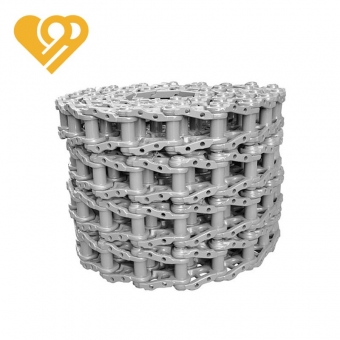
Track chain assemblies used in crawler equipment undercarriage systems.
Before measuring a crawler track, it is important to understand the difference between pitch and link count. These specifications describe different aspects of the track chain and must be checked separately.
Track chain pitch is the center-to-center distance between two consecutive track pins. It is usually measured in millimeters and determines the spacing of the track chain joints. Pitch must match the corresponding undercarriage design, especially the sprocket tooth spacing.
Track link count refers to the total number of individual links in one complete track chain assembly. It is commonly specified as a number of links, such as 40L, 44L, or 48L, depending on the machine and track configuration.
Track chain length describes the overall length of the assembled chain. For a conventional chain with equally spaced links, the nominal pitch-based length can be estimated by multiplying pitch by link count. However, the actual assembled dimensions and master link arrangement should still be verified against the original specifications.
For example, a track chain with a nominal pitch of 190 mm and 45 links has a nominal pitch-based length of 8,550 mm. This calculation is useful for checking specifications, but it does not replace confirming the actual chain configuration.
Track chain pitch should be measured from the center of one track pin to the center of the next. Measuring only the visible gap between links or using the outside dimensions of a link can produce inaccurate results.
Follow these practical steps to check the pitch before ordering:
Prepare the track for measurement. Park the machine on firm, level ground, lower the attachment, shut down the engine, and follow the manufacturer's safety procedures. Clean away packed dirt, grease, and debris around the track pins so the measurement points are visible.
Locate two consecutive track pins. Identify the center of the first pin and the center of the adjacent pin. These are the two reference points used to measure one pitch.
Measure center to center. Use a suitable measuring tool, such as a calibrated steel ruler, tape measure, or caliper where the geometry allows. Keep the measurement aligned with the track chain and avoid measuring diagonally.
Repeat the measurement. Check several consecutive pin intervals rather than relying on a single reading. If the chain is worn, measurements taken over a longer span can help reveal pitch elongation more clearly.
Compare the result with the OEM specification. Check the machine service manual, parts catalog, or original track chain drawing. The nominal pitch should be confirmed using the correct machine configuration and part number.
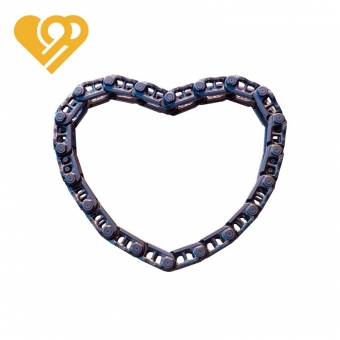
Track links and pin connections are important reference points when checking chain pitch.
For a more reliable wear assessment, measure across multiple pin intervals. If the distance across several pitches is divided by the number of intervals, the average measured pitch can be calculated.
Average measured pitch = Total measured distance ÷ Number of pitch intervals
For example, if the distance across five consecutive pitch intervals is 955 mm, the average measured pitch is 191 mm. If the original nominal pitch is 190 mm, this indicates approximately 0.53% elongation. Compare the result with the applicable OEM wear limits rather than applying one universal replacement threshold.
Counting track links sounds straightforward, but it is easy to make mistakes when the chain is dirty, worn, or equipped with a master link. An incorrect link count can result in ordering a chain that does not match the original undercarriage configuration.
Use the following method to check the total link count:
Identify the starting point. Select one clearly visible track link or pin as the starting reference. Mark it with chalk or a temporary marker if necessary.
Count each link systematically. Follow the track chain in one direction, counting every individual link once. Do not count the same link again when the chain returns to its starting point.
Check the master link. Some track chains use a master link or connecting section to join the chain ends. Confirm how this section is represented in the manufacturer's link-count specification to avoid double-counting or omission.
Complete a second count. After reaching the starting point, repeat the count or ask another technician to verify it. For long bulldozer tracks, dividing the chain into marked sections can make counting easier.
Record the result. Write down the total number of links on the left and right tracks separately. Do not automatically assume both sides have identical specifications, particularly when dealing with modified or previously repaired equipment.
A useful purchasing practice is to record both the link count and the number of track shoes. These values are related but are not always interchangeable because the assembly configuration and shoe installation must also be considered.
Once pitch and link count have been confirmed, buyers can estimate the nominal track chain length using a simple formula.
Nominal track chain length = Track chain pitch × Total link count
For example:
This calculation provides a useful reference when comparing replacement chain specifications. However, it should not be used as the only basis for ordering. The actual chain design, joint arrangement, master link construction, and machine-specific installation dimensions must also be considered.
Yintparts supplies track chains for excavators and bulldozers with different pitch specifications. Its product range covers pitch sizes from 90 mm to 260 mm, with customization available according to customer requirements.
For example, the EC210/R220/PC200-5 track chain product page provides installation dimensions for different machine applications, giving buyers a useful reference when checking replacement specifications.
Pitch and link count are essential, but they are not the only factors that determine whether a replacement track chain is suitable. Two chains may have the same pitch and link count but still differ in other important installation dimensions.
Before confirming an order, check the following specifications:
It is also important to inspect the related undercarriage components. Worn sprocket teeth can affect chain engagement, while damaged rollers and idlers may contribute to uneven wear or tracking problems.
When replacing the chain, it is therefore worth checking the condition of the excavator and bulldozer sprockets and segments as well as the chain itself.
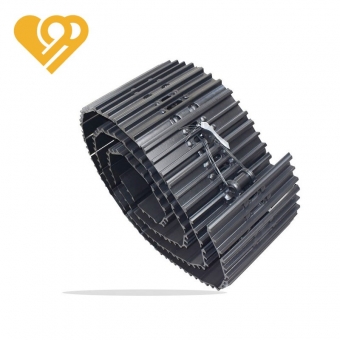
Complete crawler track assemblies require compatible chain and track shoe specifications.
Incorrect measurements are one of the main reasons replacement undercarriage parts do not fit as expected. Buyers can reduce this risk by paying attention to several common mistakes.
Measuring one worn pitch interval only. Pin and bushing wear can increase the measured distance between joints. Measuring multiple intervals provides a better indication of average pitch elongation.
Confusing pitch with link count. Pitch describes the distance between adjacent pins, while link count describes how many links are included in the chain. Both specifications are necessary.
Using the machine model as the only reference. The same machine model may have different undercarriage configurations depending on its production series, serial number, or previous modifications. Always verify the OEM part number and physical dimensions.
Ignoring the master link. Different master link designs may affect how the chain is assembled and identified. Confirm the correct configuration before production.
Failing to check the complete undercarriage. Replacing the chain without inspecting the sprockets, rollers, and idlers may leave existing wear problems unresolved. A complete inspection helps identify whether other components should also be replaced.
For international equipment owners, distributors, and maintenance companies, finding a replacement track chain is not simply about matching a product photograph. Accurate dimensions, suitable materials, manufacturing quality, and machine compatibility all matter.
Xiamen Yintai Machinery Co., Ltd. (Yintparts) specializes in excavator and bulldozer undercarriage components. The company manufactures different types of track links and track chain assemblies, offering customized products according to customer requirements.
Its manufacturing processes include forging, quenching, tempering, professional heat treatment, and precision machining. Horizontal and vertical CNC machining equipment is used to support dimensional accuracy and product consistency.
Buyers looking for a specific machine application can review the D8R/D8T lubricated track chain assembly as an example of a machine-specific replacement product.
To help the Yintparts team identify the correct track chain, buyers should prepare the following information before sending an inquiry:
If the original specifications are unavailable, clear photographs and physical measurements can help the supplier evaluate the application. The final product specifications should always be confirmed with the manufacturer before production.
Before purchasing a replacement excavator or bulldozer track chain, make sure the main specifications have been checked and recorded. A simple purchasing checklist can prevent avoidable communication errors and help suppliers provide more accurate quotations.
Accurate track chain pitch and link count measurements are the starting point for selecting the right replacement. By combining physical measurements with machine identification and OEM specifications, buyers can reduce the risk of ordering incompatible undercarriage components.
Yintparts supports customized excavator and bulldozer track chain requirements. Contact the team with your machine model, pitch, link count, and product photographs to discuss a suitable replacement solution.
How do you measure track chain pitch?
Track chain pitch is measured from the center of one track pin to the center of the next consecutive pin. For a more reliable wear assessment, measure across multiple pin intervals and divide the total distance by the number of intervals.
How do you count excavator track links?
Start from one clearly identified link and count each link around the complete chain until you return to the starting point. Repeat the count to verify the result, and check how the master link is included in the manufacturer's specification.
Are track chain pitch and link count the same thing?
No. Track chain pitch is the center-to-center distance between consecutive track pins, while link count is the total number of links in the complete chain assembly. Both specifications are needed when identifying a replacement track chain.
How do you calculate track chain length?
For a conventional equally spaced track chain, multiply the nominal pitch by the total number of links to estimate the pitch-based chain length. Actual assembly dimensions and master link arrangements should also be checked against OEM specifications.
Can two excavators use the same track chain pitch but different link counts?
Yes. Different machine models or undercarriage configurations can use the same nominal pitch but require different total link counts. Always confirm the complete chain specifications rather than relying on pitch alone.
Does track chain wear change the measured pitch?
Yes. Wear at the pins and bushings can increase the measured distance between consecutive joints, resulting in pitch elongation. Compare measurements across several intervals with the manufacturer's wear limits to assess chain condition.
What information should I provide when ordering a replacement track chain?
Provide the machine brand and model, serial number if available, OEM part number, track chain pitch, link count, chain type, master link configuration, and photographs or technical drawings. These details help the supplier verify compatibility.
Can Yintparts provide customized excavator and bulldozer track chains?
Yes. Yintparts manufactures different types of excavator and bulldozer track links and track chain assemblies. Customized requirements can be discussed based on machine applications, technical specifications, drawings, and samples.
get latest company news
Xiamen Yintai Machinery Co., Ltd


 ipv6 network supported
 sales & support 8613696958576
 Email : binochen@yintparts.com