Ordering excavator parts in bulk can help distributors, wholesalers, and construction machinery suppliers maintain stable inventory and reduce purchasing costs. However, a large order also increases the potential impact of quality problems. If a batch of track rollers, track chains, sprockets, or other undercarriage components does not meet the agreed specifications, buyers may face installation issues, customer complaints, replacement costs, and delivery delays.
So, how can buyers reduce quality risks when ordering excavator parts in bulk? The most effective approach is to establish clear quality requirements before production, verify the first production samples, monitor important manufacturing processes, and inspect the finished batch before shipment.
For buyers sourcing excavator and bulldozer spare parts from overseas manufacturers, quality control should not depend on a supplier's promises alone. It should be supported by product specifications, inspection records, production monitoring, and clear acceptance standards. This guide explains how to manage these steps and how Yintparts approaches excavator undercarriage parts manufacturing and quality control.
A quality problem in a single replacement part may be relatively easy to handle. However, when hundreds or thousands of components are ordered together, the same manufacturing issue can affect a much larger quantity of products.
For example, if the heat treatment process is not properly controlled during track roller production, multiple rollers from the same production batch may have insufficient hardness or inconsistent wear performance. Similarly, an incorrect drawing revision can result in an entire batch of components being manufactured with unsuitable installation dimensions.
Common quality risks in bulk excavator parts purchasing include:
The key point is that bulk purchasing requires consistent quality across the entire production batch, not just one acceptable sample. Buyers should therefore establish a quality control plan that covers both individual product specifications and batch-level consistency.
The first step in reducing bulk order quality risks is selecting a manufacturer that has the appropriate production equipment, technical experience, and quality management procedures.
A supplier's product catalog and factory photographs can provide useful background information, but buyers should also understand which manufacturing processes are performed in-house, which processes are outsourced, and how quality is monitored at each stage.
When evaluating an excavator parts manufacturer, buyers should pay attention to the following areas:
Xiamen Yintai Machinery Co., Ltd. (Yintparts) specializes in excavator and bulldozer spare parts manufacturing and supply. Its product range includes track chains, track shoes, bottom rollers, carrier rollers, front idlers, sprockets, and ground engaging tools.
The company describes manufacturing resources including CNC machining centers, automatic welding equipment, and heat treatment facilities. It also cooperates with established Chinese steel manufacturers and controls quality from raw material sourcing through production and final packing.
For buyers considering a new supplier, reviewing the manufacturer's company background and manufacturing capabilities is a useful starting point before discussing a bulk purchasing agreement.
Many bulk order problems start before manufacturing begins. Buyers and suppliers may have different understandings of the product dimensions, material grade, machine application, or OEM part number. If these details are not confirmed in advance, the factory may produce a large quantity of parts that do not meet the buyer's actual requirements.
Before confirming an order, buyers should provide as much technical information as possible, including:
For example, a buyer ordering excavator track chains should not only confirm the machine brand. Track pitch, link dimensions, chain configuration, and compatibility with the corresponding sprocket and track shoes are also important.

Excavator and bulldozer track chain assemblies
Yintparts manufactures different types of excavator and bulldozer track chains, including customized products. Buyers can review the track chain and track link product range and provide drawings or samples to help confirm the correct configuration.
Another important detail is drawing revision control. If the buyer changes a dimension or technical requirement after the quotation stage, both parties should confirm the updated drawing before production. The approved version should be used as the reference for manufacturing and final inspection.
One of the most practical ways to reduce quality risks is to inspect a sample before approving mass production. A sample allows buyers to evaluate the product's dimensions, structure, material appearance, assembly features, and compatibility with the intended machine.
For a new supplier or customized component, buyers can request a pre-production sample or first production article. The sample should be checked against the approved technical drawing and purchase requirements.
For example, when evaluating an excavator bottom track roller, buyers should pay attention to:
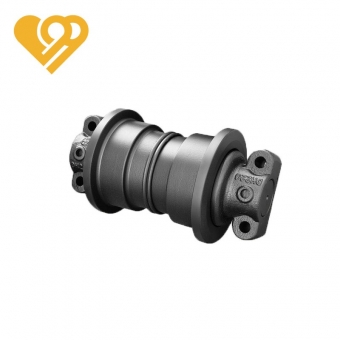
Excavator bottom track roller component
The sample approval process should be documented. Buyers can keep approved samples, inspection photographs, drawings, and measurement records as reference materials for subsequent production batches.
It is important to understand that an approved sample does not guarantee the quality of every unit in a bulk order. It confirms the agreed product reference. The manufacturer still needs to maintain consistent production conditions and inspect the remaining products.
For buyers sourcing excavator bottom track rollers, confirming the sample's critical dimensions and technical requirements before mass production can help prevent repeated manufacturing errors.
Once mass production starts, buyers should pay attention to the manufacturing processes that have the greatest influence on product performance. Raw material quality and heat treatment are especially important for excavator undercarriage components exposed to heavy loads, repeated impact, and abrasive wear.
Different components require different material and process specifications. Track links, sprockets, rollers, and track shoes should not automatically be judged by the same hardness or material requirements.
For material verification, buyers can request relevant steel certificates and confirm that the supplied material matches the approved specification. Incoming material inspection should also be part of the manufacturer's quality control procedure.
Heat treatment requires similar attention. Quenching and tempering help achieve the required mechanical properties, but the results depend on material composition, heating conditions, cooling processes, and process consistency.
Depending on the component, buyers may request:
For example, sprocket teeth experience repeated contact with the track chain. Their material properties, tooth profile, and hardness requirements need to be controlled to support proper engagement and wear performance.

Excavator drive sprocket and undercarriage components
Yintparts uses professional quenching and tempering processes for its undercarriage components. Buyers sourcing excavator sprockets and segments should confirm the applicable material, tooth dimensions, hardness range, and inspection requirements before production.
Dimensional accuracy is essential when purchasing replacement excavator parts. A component may look similar to the original part but still have incorrect mounting dimensions, hole positions, thickness, or assembly features.
For bulk orders, buyers should identify critical dimensions before manufacturing and agree on how these dimensions will be measured and recorded. The inspection report should include actual measured values rather than simply stating that the product has passed inspection.
A practical inspection plan can include the following stages:
| Inspection Stage | What to Check | Main Purpose |
|---|---|---|
| Incoming material inspection | Steel grade and material condition | Prevent incorrect materials from entering production |
| First article inspection | Product structure and critical dimensions | Confirm production matches approved specifications |
| In-process inspection | Machining, welding, and heat treatment | Identify problems before further production |
| Batch sampling inspection | Dimensions, hardness, and appearance | Check consistency across the production lot |
| Final inspection | Quantity, specifications, and product condition | Confirm readiness for shipment |
The sampling quantity should be agreed upon before production. It can depend on order size, product complexity, quality history, and the potential impact of failure. For critical dimensions or high-risk components, buyers may require additional inspection or more extensive testing.
For example, a track shoe assembly requires attention to plate dimensions, thickness, hole positions, and relevant welding quality. Buyers can review the excavator and bulldozer track shoe assemblies and establish product-specific acceptance criteria before placing a large order.
A useful rule is to inspect according to the actual risk of the component rather than applying the same inspection checklist to every product. This keeps quality control practical while giving more attention to critical product characteristics.
Quality documents help buyers verify whether the manufacturer has the agreed production and inspection requirements. They are particularly useful for overseas bulk orders because buyers may not be able to visit the factory or inspect every component in person.
Depending on the product and purchase agreement, buyers can request the following documents:
Buyers should also pay attention to batch traceability. A quality report is more useful when it identifies the product name, part number, production batch, inspection date, and applicable specifications.
For example, if a buyer receives a batch of track rollers and later discovers an abnormal wear problem, batch identification and production records can help determine whether the issue is related to a specific material batch, heat treatment process, or production period.
It is also important to distinguish between company certificates and product-specific inspection reports. An ISO 9001 certificate relates to a quality management system within its stated scope. It does not independently prove that every component in a particular shipment meets the purchase requirements.
Yintparts provides quality-related information and inspection support as part of its manufacturing and customer service. Buyers should confirm the exact reports, testing scope, and batch identification requirements with the supplier before production begins.
Pre-shipment inspection is an important final checkpoint for bulk excavator parts orders. It helps buyers confirm that the finished goods match the purchase order before transportation begins.
Even when the manufacturer has completed production and internal inspection, buyers should not assume that all shipment details are automatically correct. Product specifications, quantities, packaging, and identification should be checked against the approved order.
A pre-shipment inspection can include:
For international orders, packaging deserves particular attention. Heavy excavator undercarriage components need suitable protection against moisture, impact, and handling damage during storage and transportation.
Buyers can request clear photographs or videos of the actual order before shipment. For high-value or particularly critical orders, an independent third-party inspection may also be appropriate.
The inspection scope and acceptance criteria should be agreed upon before production. This avoids disagreements about what constitutes an acceptable product after the goods have already been manufactured.
A clear purchase agreement is another important tool for reducing quality risks. Verbal promises may be difficult to verify when a problem occurs, especially in international transactions involving large quantities of spare parts.
Before confirming a bulk order, buyers should clarify the following points in writing:
Buyers should also understand how the supplier handles nonconforming products. A reliable quality process should identify defective components, separate them from approved products, investigate the cause, and record the corrective action.
Yintparts describes a one-year quality warranty and technical support as part of its after-sales service. Buyers should confirm the applicable warranty scope, exclusions, claim procedures, and supporting evidence for their particular products and orders.
For distributors, wholesalers, and construction machinery parts importers, choosing a supplier involves more than finding products at a competitive price. Manufacturing consistency, technical communication, inspection support, and delivery coordination are also important.
Xiamen Yintai Machinery Co., Ltd. (Yintparts) focuses on excavator and bulldozer spare parts, including undercarriage components and ground engaging tools. Its product range covers track chains, track shoes, track rollers, carrier rollers, front idlers, sprockets, bucket teeth, adapters, and other replacement parts.
The company works with established steel suppliers and uses machining, welding, and heat treatment processes in its manufacturing operations. It also offers customized production according to customer samples, designs, and technical drawings.
For bulk purchasing, buyers can provide the machine brand, model, OEM part number, technical drawings, expected order quantity, and inspection requirements. These details help the manufacturer understand the order and confirm the appropriate production and quality control arrangements.
Rather than waiting until the finished products arrive to discover quality problems, buyers should establish clear requirements and inspection checkpoints from the beginning. This approach helps reduce avoidable risks and makes long-term cooperation between buyers and manufacturers more predictable.
If you are planning a bulk order of excavator or bulldozer spare parts, contact Yintparts to discuss product specifications, manufacturing requirements, and quality inspection arrangements.
How can buyers reduce quality risks when ordering excavator parts in bulk?
Buyers can reduce quality risks by selecting a qualified manufacturer, confirming product specifications, approving pre-production samples, monitoring material and manufacturing processes, arranging batch inspections, and requesting final inspection reports before shipment.
Should buyers request a sample before placing a bulk excavator parts order?
Yes. A sample or first production article allows buyers to check dimensions, materials, product structure, and compatibility before mass production. The approved sample should be kept as a reference for subsequent production and inspection.
What quality documents should I request from an excavator parts manufacturer?
Depending on the product requirements, buyers should request material certificates, dimensional inspection reports, hardness test reports, heat treatment records, applicable welding inspection records, and final inspection reports. Batch identification should also be included where required.
How can buyers check the quality of excavator undercarriage parts?
Buyers should check material specifications, critical dimensions, hardness, heat treatment requirements, welding quality where applicable, surface condition, and assembly compatibility. Inspection methods should be selected according to the component and its technical specifications.
Is a final inspection enough to guarantee the quality of a bulk order?
No. Final inspection is important, but it should be supported by incoming material checks, first article approval, in-process quality control, and batch sampling. Quality should be managed throughout manufacturing rather than checked only before shipment.
Should buyers arrange third-party inspection for bulk excavator parts orders?
Third-party inspection can be useful for high-value, customized, or high-risk orders, especially when buyers cannot visit the factory. The inspection scope and acceptance criteria should be agreed upon before production or shipment.
What should buyers do if a bulk shipment contains defective excavator parts?
Buyers should document the problem with photographs, inspection results, part numbers, and batch information. They should then notify the supplier and follow the agreed quality claim procedure to determine the cause and appropriate corrective action.
Can Yintparts manufacture excavator parts according to customer drawings or samples?
Yes. Yintparts states that it can manufacture excavator and bulldozer spare parts according to customer samples, designs, and technical drawings. Buyers can provide machine models, OEM part numbers, drawings, and required quantities to discuss customized production.
get latest company news
Xiamen Yintai Machinery Co., Ltd


 ipv6 network supported
 sales & support 8613696958576
 Email : binochen@yintparts.com