A worn track roller or bucket tooth has stopped your machine. Now you must decide: install OEM parts from the original manufacturer, or choose aftermarket parts from a trusted third-party supplier. OEM components guarantee exact fit. Aftermarket excavator parts from independent manufacturers often deliver comparable durability for less money.
This article helps you weigh cost, quality, warranty, and fit before ordering. You need a practical comparison, not a sales pitch. Both options have trade-offs you should understand. Your decision affects your budget and your uptime. With the right information, you can keep your jobsite productive without overpaying or risking your machine.
Aftermarket parts cost 20-50% less than OEM parts, saving you money on repairs.
High-quality aftermarket parts can match OEM durability with proper materials and heat treatment.
OEM parts guarantee perfect fit and preserve your machine's warranty.
Always match part numbers to your excavator's serial number to ensure proper fit.
Choose OEM for critical or warranty-sensitive repairs, and aftermarket for older machines and wear items.
OEM stands for original equipment manufacturer. That phrase identifies the company that designed and built your excavator. Caterpillar, Komatsu, Hitachi, and Volvo are familiar examples. OEM excavator parts carry the same part numbers and specifications as the components original to the machine. They match the factory build exactly.
Installing OEM parts guarantees a fit. You do not need to modify anything. Material grade, heat treatment, and tolerances mirror the original design. Critical systems like final drives or track chains need genuine components to reduce downtime risk. A dealer can confirm the correct OEM excavator parts for your machine by checking the serial number.
Aftermarket excavator parts come from independent manufacturers. These third-party companies design components to replace the originals. Independent suppliers cover major brands such as CASE, CAT, Deere, Hitachi, Hyundai, Kobelco, Komatsu, Link-Belt, Samsung, and Volvo. Coverage spans undercarriage, drivetrain, hydraulics, engines, cooling, fuel, electrical, steering, brake, and wear parts. That coverage includes nearly every system you may need to repair on your excavator.
Suppliers like EquipXR offer individual repair parts, rebuild components, and complete assemblies for current and older machines. ConEquip supplies new, used, and rebuilt excavator parts, with an inventory covering alternators, hydraulic pumps, final drives and travel motors, track adjuster spring assemblies, undercarriage rollers, seal kits, and swing motors.
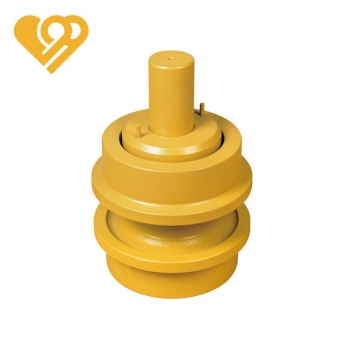
Independent aftermarket manufacturers produce excavator spare parts and excavator replacement parts, including track rollers, track chains, sprockets, and bucket teeth. These aftermarket undercarriage parts—aftermarket track rollers, aftermarket track chains, aftermarket sprockets, and track shoes—give you a cost-conscious alternative to OEM parts. The choice between OEM parts vs aftermarket parts often depends on your machine's age and warranty status. Both options work; OEM and aftermarket parts serve different situations. Weigh OEM vs aftermarket and consider the part's role and your budget.
For undercarriage repairs, you can also explore excavator track rollers to compare replacement options for different machine applications.
OEM excavator parts cost more because you pay for the original manufacturer's research, development, and branding. An industry cost analysis shows that a Caterpillar 320 undercarriage kit may cost between $8,000 and $12,000 for OEM parts. That price reflects premium materials and extensive testing. The manufacturer recovers years of engineering investment with every sale. Brand reputation also adds a premium. You pay for the confidence that comes with the original name.
This pricing model applies across the board. General OEM parts cost 20–50% more than alternatives. The gap is not random. It covers design validation, factory tooling, and dealer network support. When you buy OEM, you fund the entire supply chain behind the original machine. That chain includes engineering teams, testing facilities, and authorized distribution. These costs do not disappear. They appear in the part number you order.
Aftermarket parts cost less because third-party manufacturers control their own production costs. They do not carry the same R&D burden or brand markup. The savings are substantial. Aftermarket parts are 20–50% less expensive than OEM equivalents. A specific sprocket example makes this clear: an OEM sprocket costs $2,500, while an aftermarket sprocket costs $1,500. That is roughly 40% less. For a Volvo EC210, aftermarket sprockets run 25–40% cheaper than OEM. A Caterpillar 320 undercarriage kit from the aftermarket saves 30–40%, with comparable kits ranging from $5,000 to $8,000.
When comparing replacement costs, review the available excavator sprockets and segments alongside other undercarriage components.
These numbers matter when you run older equipment or high-wear components. Aftermarket undercarriage parts, including aftermarket track rollers, aftermarket track chains, aftermarket sprockets, and aftermarket track shoes, deliver significant savings. You can replace a worn track roller or track chain without paying the OEM premium. The table below summarizes typical price differences.
|
Comparison Basis |
OEM vs Aftermarket Price Difference |
|---|---|
|
General OEM parts vs alternatives |
OEM costs 20–50% more |
|
Aftermarket sprockets (e.g., Volvo EC210) |
25–40% cheaper than OEM |
|
Caterpillar 320 undercarriage kit |
Aftermarket saves 30–40% |
|
Specific sprocket example |
OEM $2,500 vs aftermarket $1,500 (~40% less) |
|
FAQ summary |
Aftermarket parts are 20–50% less expensive |
The cost advantage of aftermarket parts goes beyond the sticker price. You gain flexibility in sourcing. Multiple suppliers compete for your business. That competition keeps prices down. For excavator parts cost management, aftermarket options give you room to budget for other repairs. You can stock spare aftermarket track shoes or track rollers without tying up capital. The oem vs aftermarket availability and cost trade-off favors aftermarket when your machine is out of warranty or when the part is a wear item. You decide based on your situation. The savings are real, and they add up across a full undercarriage rebuild.
You might assume oem parts always win on quality. That assumption deserves a closer look. Original equipment manufacturers produce exact-fit components. Reputable aftermarket manufacturers can match that durability when they follow strict material and process controls. The advantages of aftermarket parts for heavy equipment often include comparable performance at a lower price point.
Material grade drives wear life. High-grade alloy steels such as chromium-molybdenum grades offer toughness and abrasion resistance. A track roller's flange undergoes precise carburizing to create a deep, hardened case. The core stays ductile to absorb shock. High-quality track chains and shoes typically exhibit a hardness of HRC 45-50. That range suits heavy-duty operating conditions. Manufacturers may disclose hardening depth and hardness Rockwell values. You can then compare oem and aftermarket parts on measurable data rather than brand claims.
Controlled heat treatment separates durable aftermarket parts from cheap copies. The process heats the surface to 850–900°C, then quenches it in a water-based liquid or oil. This forms martensite and raises surface hardness. A tempering stage at 180–250°C removes internal stress and reduces brittleness. The result balances hardness with toughness. Surface induction hardening strengthens only the working surface while keeping the core tough. These steps directly reduce wear and extend component life.
Reputable aftermarket manufacturers apply these principles. They use controlled heat treatment, precision machining, and forging to produce undercarriage parts and ground engaging tools, achieving high strength and wear resistance through quench-tempering processes. This approach gives high-quality aftermarket parts the durability you need for demanding work.
The right part for one jobsite may fail on another. You must match components to your specific conditions. This is where the oem vs aftermarket parts decision becomes practical rather than philosophical.
Consider your material type. Hard rock such as granite or basalt demands sharp, penetration-enhanced bucket teeth. You need maximum point force to fracture rock. Sand and gravel call for blunt, heavy-duty profiles. Abrasion resistance matters more than penetration in those conditions. A simple rule applies: if your bucket bounces off the material, choose a sharper tooth profile. If teeth wear out in hours but penetrate easily, try a blunter, heavier-duty design.
Track selection follows the same logic. Steel tracks suit hard, rocky, and heavy digging work. Narrow shoes bite into hard ground for better traction. Quality aftermarket undercarriage components use hardened steel and sealed bearings. They are manufactured to tolerances that match or exceed original equipment specifications. This makes aftermarket track chains and aftermarket track shoes viable options for abrasive conditions.
Monitor wear patterns to guide your choices. Check track tension every 50 hours under normal conditions. Inspect components every 25 hours on rocky or abrasive surfaces. Replace the drive sprocket alongside new tracks when teeth show visible wear. These practices apply whether you run oem excavator parts or aftermarket alternatives.
The cost and performance trade-offs favor aftermarket parts when you match them correctly to your application. You gain savings without sacrificing the wear life your operation requires.
For machines working in abrasive environments, review excavator track chain links when evaluating undercarriage replacement options.
Warranty coverage rules differ between OEM and aftermarket parts. Aftermarket equipment parts save money, but you must check the coverage terms. If a third-party part fails and damages another component, the manufacturer may not cover it. You may need the supplier's warranty instead.
Warranty terms vary by supplier. Compare policies before purchase.
|
Warranty Structure |
Coverage Duration |
Hour Limit |
|---|---|---|
|
OEM parts |
Varies by manufacturer |
Varies by manufacturer |
|
Aftermarket parts |
Varies by supplier |
Varies by supplier |
|
Heavy-duty supplier lines |
Varies by supplier |
Varies by supplier |
|
Premium undercarriage lines |
Varies by supplier |
Varies by supplier |
|
Typical policy |
Varies by supplier |
Varies by supplier |
Fitment starts with the serial number. Match the part number or cross-reference against that serial. Spares vary by year and engine series. Send photos of the old part and nameplate. Most wrong-part issues occur when a buyer gives only a model name.
Independent aftermarket manufacturers produce excavator spare parts and excavator replacement parts for Caterpillar, Komatsu, Hitachi, and other brands. The line covers track rollers, chains, sprockets, and shoes. Each item still requires serial confirmation. Quality varies; some suppliers match factory tolerances, others need modification. OEM excavator parts guarantee exact fit but cost more.
Check reviews before ordering. Both oem and aftermarket parts have trade-offs. The oem vs aftermarket parts debate narrows once you know the serial. Weigh oem vs aftermarket per component. Your oem vs. aftermarket equipment parts choice affects uptime. The advantages of oem parts for construction equipment include perfect fit. The advantages of aftermarket excavator parts include lower cost. Verified part numbers protect performance, warranty, and roi.
Your equipment's age shapes the oem vs aftermarket parts decision. Newer machines still under warranty favor oem parts for guaranteed compatibility and preserved coverage. Older, out-of-production models often make more sense with aftermarket parts because oem excavator parts become harder to source and may exceed the machine's remaining value.
Component criticality matters too. Engine and electronic parts typically stay oem due to sensor compatibility. Hydraulics may use quality aftermarket when flow rates match. Undercarriage and ground engaging tools are high-wear consumables, so aftermarket options work well there. Fleet managers track failure rates, service life, and total cost per operating hour. In one construction fleet, aftermarket hydraulic hoses cost less but failed more often in abrasive quarry work, while the same hoses lasted longer on dump trucks running paved routes. The fleet used oem hoses in quarries and aftermarket hoses on road trucks. This example shows when to choose oem vs. aftermarket based on application.
|
Equipment Age |
Recommended Part Type |
Key Reasons |
|---|---|---|
|
Newer machines |
OEM parts |
Guaranteed compatibility, preserved warranty |
|
Older machinery |
Aftermarket parts |
Cost-effective, greater availability |
|
Out-of-production models |
Aftermarket parts |
OEM sourcing becomes difficult |
|
Less-utilized machines |
Aftermarket parts |
Budget-friendly maintenance |
You need a supplier qualification process. Verify any quality-management certification and check that the accreditation body is recognized. Read the scope statement carefully. Confirm it explicitly covers the specific excavator components you order. Vague terms like "general manufacturing" are red flags. Check exclusions for critical processes such as heat treatment. Validate the certificate number in the accreditation body's online directory.
Request material reports to verify durability. Ask for photos, dimensions, and application fit data. Compare supplier reliability, delivery times, and pricing objectively. A narrow certification scope can mean quality controls do not apply to the delivered parts. When sourcing aftermarket undercarriage parts, excavator spare parts, or excavator replacement parts, apply these five tips for buying high-quality aftermarket parts: verify certification scope, request material reports, check customer reviews, confirm warranty terms, and test fit before full installation. These steps help you find high-quality aftermarket parts and control excavator parts cost.
For ground-engaging wear components, you can also check excavator bucket teeth to explore replacement options for demanding digging applications.
OEM parts give you an exact fit. Aftermarket parts give you savings and more buying options. Use a simple rule for the oem vs aftermarket parts choice. Pick OEM for critical repairs. Pick quality aftermarket parts for older equipment, high-wear ground engaging tools, or non-critical components.
Your final thoughts on oem vs. aftermarket parts should end with action. Compare part numbers before you order. Ask about warranty policies. Check supplier certifications. Consult a trusted mechanic. That approach settles the oem vs aftermarket question for your machine, your budget, and your jobsite.
Warranty coverage rules differ by manufacturer and supplier. If a non-OEM part fails and damages another system, the manufacturer may deny that specific claim. Review the supplier's warranty policy. Check your machine serial number before installation.
Match the part number to your excavator's serial number. Production year and engine series alter compatibility across generations. Compare dimensions, bolt patterns, and hardness data. Most fitting problems occur when buyers provide only a model name. Verify aftermarket excavator replacement parts against your serial number before installation.
Reputable aftermarket parts manufacturers match factory durability. Controlled heat treatment, precision machining, and hardening create wear resistance close to OEM levels. Quench-tempering builds excavator spare parts that survive abrasive jobsites. Request material reports and hardness values before purchase.
Aftermarket parts typically run 20–50% less than factory equivalents. A Volvo EC210 sprocket costs 25–40% less. Caterpillar 320 undercarriage kits save 30–40%. Factory pricing reflects development and brand markup. Aftermarket suppliers control production costs, so your repair budget captures the savings.
Use factory parts for critical systems under warranty or with precision electronics. Choose quality components for wear items like track shoes, bucket teeth, and sprockets on older machines. Your budget and jobsite abrasiveness shape the OEM vs aftermarket choice. Check part numbers and supplier certifications before ordering.
get latest company news
Xiamen Yintai Machinery Co., Ltd


 ipv6 network supported
  sales & support 8613696958576
 Email : binochen@yintparts.com