When choosing an excavator track roller, buyers often compare material, heat treatment, and hardness specifications. However, one important detail is sometimes overlooked: the difference between surface hardness and core hardness. These two properties affect different aspects of roller performance, and checking only one hardness value may not provide a complete picture of product quality.
Surface hardness mainly determines how well the roller resists wear at the contact area, while core hardness relates to the mechanical properties of the material beneath the hardened surface. A reliable track roller needs an appropriate combination of both. If the surface is too soft, it may wear quickly. If the hardened layer or internal material is unsuitable, the roller may become more vulnerable to cracking, deformation, or premature failure under heavy loads.
For excavator and bulldozer owners, equipment distributors, and undercarriage parts buyers, understanding this difference makes it easier to evaluate heat-treated rollers and ask manufacturers the right technical questions.
Surface hardness refers to the resistance of the outer material to indentation, scratching, and localized deformation. On a track roller, the outer running surface is in repeated contact with the track chain or track links. During operation, this area experiences continuous pressure, friction, and abrasive wear.
Because the roller supports the machine's weight and rotates as the crawler moves, its external contact area needs sufficient hardness to resist material loss. If the surface is not properly hardened, the roller may develop wear grooves, uneven contact patterns, or excessive diameter reduction over time.
Heat treatment is commonly used to improve the hardness of the wearing area. Depending on the material, component design, and manufacturing process, the treatment may create a hardened surface layer while leaving the deeper material with different mechanical properties.
For example, Yintparts manufactures different types of excavator and bulldozer bottom track rollers, with heat treatment and machining processes used in production. The specific hardness requirements should be matched to the roller design, material, and intended operating conditions.

The manufacturing process is important because surface hardness is not determined by material selection alone. Heating temperature, holding time, cooling conditions, and subsequent tempering can all influence the final properties of the roller.
Core hardness refers to the hardness of the material inside the roller, below the outer hardened zone. It represents the condition of the deeper material rather than the exposed wearing surface.
The core plays an important role in supporting the external hardened layer. During excavation, a track roller is exposed to the weight of the machine, repeated loading, vibration, and impact from uneven ground. The internal material must have suitable mechanical properties to withstand these forces.
If the core is too soft for the application, the roller may not provide sufficient support under heavy loads. If the internal material becomes excessively hard or brittle due to unsuitable heat treatment, its ability to withstand impact may be reduced.
This is why a track roller should not be evaluated simply by asking whether it has high hardness. Buyers should also consider whether the internal material has the strength and toughness required for the machine's working conditions.

The roller shell, shaft, bushings, seals, and other internal components work together as an assembly. The hardness of the shell is only one part of the overall performance requirements.
The main difference is their location and function. Surface hardness focuses on resistance to wear at the contact area, while core hardness relates to the properties of the material beneath that area.
| Comparison | Surface Hardness | Core Hardness |
|---|---|---|
| Measurement area | Outer wearing surface | Material beneath the hardened layer |
| Main function | Resists surface wear and indentation | Supports the component under load |
| Performance concern | Wear, scoring, and surface deformation | Internal strength, toughness, and structural support |
| Quality consideration | Hardness level and hardened layer depth | Suitable hardness and mechanical properties |
| Typical inspection focus | Measurements at specified surface locations | Measurements on a prepared cross-section or core area |
For a track roller working under heavy loads, neither property should be considered independently. The surface needs enough wear resistance, while the internal material must provide appropriate support and resistance to damage.
Surface hardness and core hardness do not tell the whole story. Another important factor is hardened layer depth, which describes how far the hardened zone extends from the surface into the material.
Imagine two track rollers with similar surface hardness readings. One has a sufficiently deep hardened layer, while the other has only a thin hardened area. Their initial surface measurements may look similar, but their wear performance may become different as the outer material gradually wears away.
If the hardened layer is too shallow for the application, the wearing surface may lose its hardened properties relatively quickly. Once wear reaches the softer material beneath it, the roller may experience a faster change in wear rate.
However, a deeper hardened layer is not automatically better in every situation. The appropriate depth depends on the roller's dimensions, steel grade, heat-treatment method, design, and operating requirements.
When evaluating a CAT bottom track roller, for example, buyers should ask the manufacturer about the specified hardness range, the test location, and whether hardened layer depth is included in the inspection requirements.
These details are more useful than comparing a single hardness number without knowing how or where it was measured.
Heat treatment changes the internal structure of steel and helps manufacturers achieve the required combination of hardness, strength, and toughness. For track rollers, quenching and tempering are commonly used processes.
During quenching, steel is heated to a specified temperature and then cooled under controlled conditions. This process can increase hardness, but the resulting properties depend on the steel composition, component dimensions, heating conditions, and cooling method.
Tempering is then used to reduce excessive brittleness and adjust the mechanical properties after quenching. The final result should meet the requirements of the particular component rather than simply maximize hardness.
Some roller designs may also use localized or induction hardening to strengthen the wearing area while retaining different properties in the deeper material. The suitable process depends on the product structure and engineering requirements.
Yintparts uses quenching and tempering processes in the manufacture of its undercarriage components. Its track carrier roller range also highlights the importance of heat treatment and machining for wear resistance and product performance.
For buyers, the key point is to confirm that the heat-treatment process is suitable for the specific roller model. A process description alone does not replace measurable inspection results.
Manufacturers can use different hardness testing methods depending on the material, component geometry, and inspection purpose. Rockwell, Brinell, and Vickers are commonly used hardness testing methods, but their readings use different scales and should not be compared directly without an appropriate conversion.
For track rollers, a quality inspection plan may include the following checks:
It is also important to consider the testing location. A reading taken from a curved, rough, or unsuitable surface may not accurately represent the material's hardness. The test method, surface preparation, equipment calibration, and measurement positions all influence the reliability of the result.
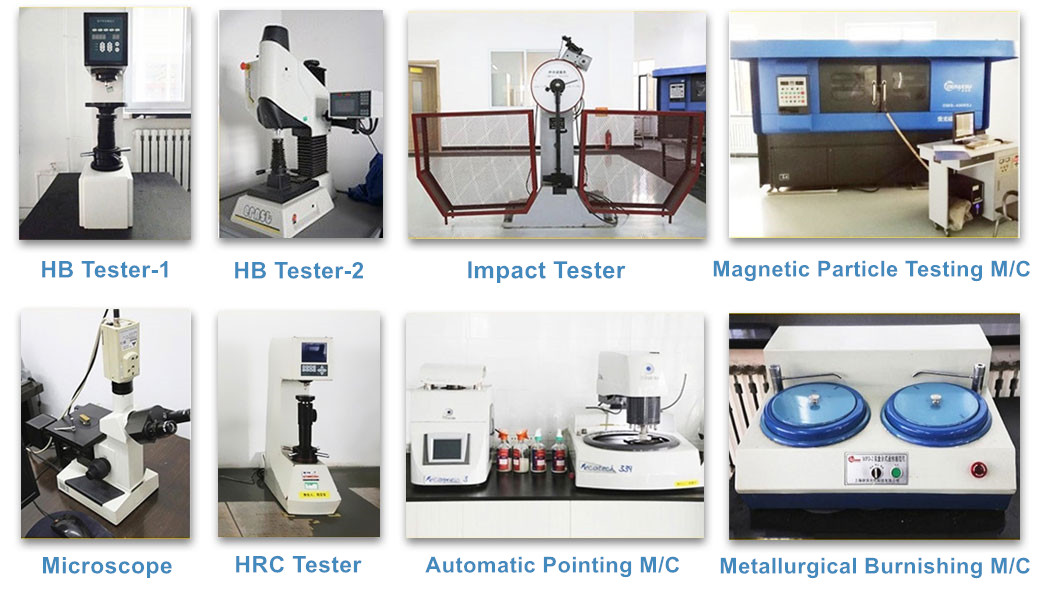
For a more complete assessment, hardness readings should be considered together with material certificates, heat-treatment records, dimensional inspection, and other tests required by the product specification.
Incorrect hardness can affect track roller performance in different ways. The actual failure mode depends on the material, heat treatment, roller design, lubrication, machine load, and working environment.
If surface hardness is too low: The roller may wear more quickly under repeated contact with the track chain. This can lead to excessive wear, uneven running surfaces, and a shorter replacement interval.
If the hardened layer is too shallow: The roller may initially show acceptable surface hardness, but the wearing area may lose its hardened properties as material is removed during operation.
If the core is too soft: The internal material may not provide sufficient support for the outer layer under the intended loads. Depending on the design and working conditions, deformation or other damage may occur.
If the material is excessively hard or brittle: The component may become more susceptible to cracking or impact damage. High hardness alone does not guarantee good toughness or long service life.
For this reason, buyers should avoid choosing track rollers based only on the highest advertised HRC value. A balanced heat-treatment specification is more meaningful than an isolated hardness figure.
When sourcing replacement track rollers, distributors and equipment owners should request clear technical information instead of relying only on general descriptions such as high hardness or wear-resistant steel.
Before placing an order, consider asking the supplier these questions:
It is also important to confirm the machine brand, model, part number, roller dimensions, and flange configuration. Even a well-heat-treated roller may not perform correctly if its dimensions or installation specifications do not match the machine.
Yintparts manufactures excavator and bulldozer undercarriage components, including different track roller models. Buyers can provide their machine information and technical requirements when requesting a quotation, making it easier to confirm product compatibility and relevant quality specifications.
What is the main difference between surface hardness and core hardness in a track roller?
Surface hardness measures the resistance of the outer wearing area to indentation and wear. Core hardness refers to the hardness of the material deeper inside the roller. Surface hardness helps protect the contact area, while the core provides internal support and contributes to the component's overall mechanical properties.
Is higher surface hardness always better for an excavator track roller?
No. Higher surface hardness does not automatically mean longer service life. The roller also needs suitable toughness, core properties, and hardened layer depth. Excessive or unsuitable hardness may increase brittleness and the risk of cracking under impact.
Why is hardened layer depth important for track rollers?
Hardened layer depth indicates how far the hardened zone extends below the surface. If the hardened layer is too shallow for the application, the wearing area may lose its hardened properties as the roller wears. The required depth should follow the product design and technical specification.
How do manufacturers test the core hardness of a track roller?
Core hardness is generally measured on a properly prepared cross-section of the component. Depending on the material and inspection requirements, manufacturers may use Rockwell, Brinell, or Vickers testing methods. The selected method must be suitable for the test area and material condition.
What hardness information should buyers request from a track roller supplier?
Buyers should ask for the specified surface hardness range, core hardness requirements where applicable, hardened layer depth, testing method, measurement locations, and relevant inspection records. These details help buyers assess heat-treatment quality more accurately than a single hardness value.
Can a track roller have a hard surface and still fail during operation?
Yes. A hard surface alone cannot guarantee reliable performance. Insufficient core toughness, an unsuitable hardened layer, material defects, poor lubrication, incorrect installation, or excessive operating loads can still contribute to premature failure.
get latest company news
Xiamen Yintai Machinery Co., Ltd


 ipv6 network supported
 sales & support 8613696958576
 Email : binochen@yintparts.com