When purchasing excavator undercarriage parts, dimensional accuracy is one of the most important factors buyers should check before placing an order. A track roller or front idler may look correct from the outside, but even a small difference in installation dimensions can cause fitting problems, uneven track tension, abnormal wear, or premature component failure.
So, how can buyers verify the dimensional accuracy of track rollers and idlers? The most reliable approach is to compare the actual measurements with the original equipment manufacturer's drawings, check critical installation dimensions using suitable measuring tools, and request inspection records from the supplier. This guide explains what to measure, how to inspect each component, and what information buyers should request before purchasing.
Track rollers support the weight of crawler excavators and bulldozers while allowing the track chain to move smoothly. Front idlers guide the track chain and help maintain proper track alignment and tension. Both components work under heavy loads, vibration, impact, and continuous friction.
If a track roller has an incorrect mounting width, flange diameter, or bolt-hole position, it may not fit the machine properly. Similarly, an idler with an incorrect overall width, wheel diameter, or mounting configuration may affect track alignment and operating stability.
For equipment owners and parts distributors, dimensional accuracy is not simply a manufacturing detail. It directly affects installation compatibility, operating performance, maintenance costs, and replacement efficiency. This is why buyers should check actual dimensions rather than relying only on product appearance or model descriptions.
When inspecting a bottom track roller, buyers should focus on the dimensions that determine installation compatibility and contact with the track chain. The exact inspection points depend on the machine model and roller design, but several measurements are commonly important.
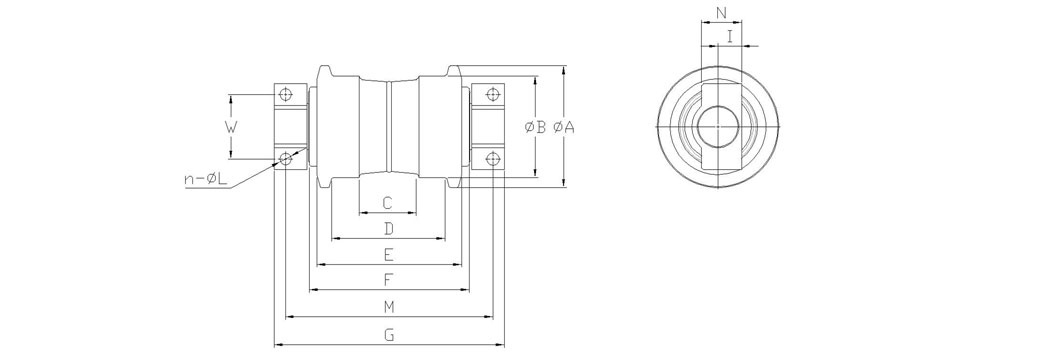
The main dimensions to verify include:
For example, Yintparts provides installation dimension references for different HITACHI track roller models. Its published specifications include models such as EX60-3, EX100, EX120, EX150-1, and EX200-2, with multiple installation parameters listed for comparison. Buyers should use the applicable model drawing and confirm the required tolerances before approving an order.
A useful practice is to create a measurement checklist for every roller model. This prevents buyers from checking only the outside diameter while overlooking mounting dimensions that are equally important for installation.
Front idlers require a slightly different inspection approach because their dimensions influence track guidance, alignment, and tension adjustment. When evaluating a front idler assembly, buyers should compare the actual product with the correct machine-specific drawing.
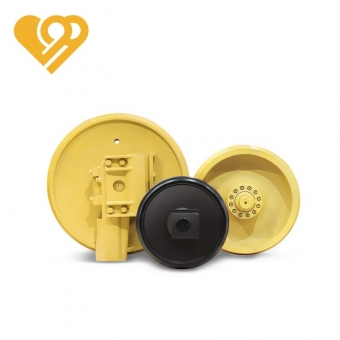
The following dimensions are particularly important:
Buyers should also pay attention to the idler's overall shape and machining condition. An idler may have the correct outer diameter but still fail to fit properly if the mounting positions or internal dimensions are incorrect.
Yintparts manufactures different types and models of excavator and bulldozer idlers, including customized products based on customer samples, technical drawings, or specific requirements. Providing the correct machine model and reference dimensions helps reduce the risk of ordering an incompatible replacement.
Buyers do not always need advanced laboratory equipment to perform a basic dimensional inspection. However, the measuring tools must be suitable for the size, geometry, and required accuracy of the component.
For regular incoming inspections, digital calipers and micrometers are practical tools for checking common dimensions. For more complicated parts or tighter tolerances, professional inspection equipment provides more reliable results.
One important detail is measurement consistency. Buyers should make sure the measuring instrument has an appropriate accuracy range, is properly calibrated, and is used on clean measurement surfaces. Dirt, burrs, paint buildup, and incorrect measuring positions can all affect the readings.
Comparing the finished component with the correct OEM drawing is one of the most effective ways to verify dimensional accuracy. However, buyers should not compare measurements randomly. Each measurement must correspond to the same reference point and measurement method shown in the drawing.
A practical inspection process includes the following steps:
For example, Yintparts lists several HITACHI installation dimension references on its HITACHI track roller product page. The EX200-2 reference lists installation parameters of 185, 150, 218, 330, 290, and 19. These values should be interpreted according to the drawing's corresponding dimension labels rather than treated as interchangeable measurements.
It is also important to distinguish between nominal dimensions and manufacturing tolerances. A dimension of 100 mm does not automatically mean that every acceptable product must measure exactly 100.00 mm. The permitted deviation must come from the approved drawing or agreed technical specification.
Dimensional accuracy depends not only on the final inspection but also on how the component is manufactured. Forging, welding, heat treatment, and machining can all influence the final dimensions of track rollers and idlers.
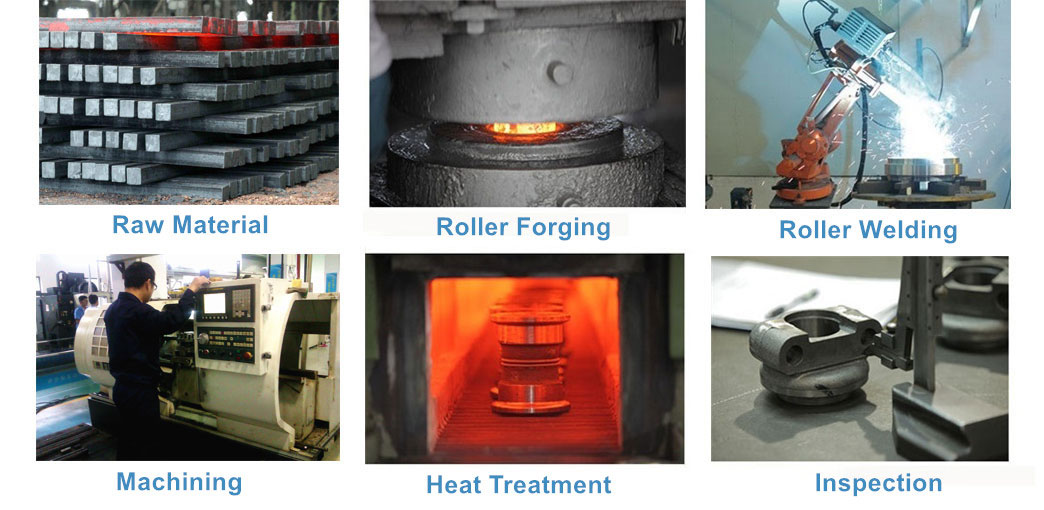
For track rollers, welding quality and machining accuracy are particularly important. Inconsistent welding can affect component stability, while inaccurate machining may lead to incorrect assembly dimensions or uneven contact surfaces.
Heat treatment is another important manufacturing stage. Quenching and tempering help improve the mechanical properties and wear resistance of undercarriage components. However, heat treatment can also introduce dimensional changes, so critical dimensions should be verified after the relevant manufacturing and finishing processes.
Yintparts uses advanced machining equipment, including Germany KUKA automatic machining centers and horizontal and vertical CNC machining equipment, to support the accuracy of assembly dimensions. The company also uses automated welding equipment and heat treatment processes in its undercarriage parts production.
For buyers, this means supplier evaluation should cover both manufacturing capabilities and final inspection procedures. A manufacturer with clear machining processes, controlled heat treatment, and documented quality checks is better positioned to maintain consistent product dimensions across batches.
When purchasing track rollers or idlers in bulk, buyers should request more than product photographs. Inspection documents provide a clearer understanding of whether the delivered components meet the agreed specifications.
Before confirming an order, consider requesting the following information:
For customized excavator track roller solutions, buyers should confirm the drawing version and inspection requirements before production begins. This is especially important when replacement parts are manufactured according to physical samples or customer-provided technical drawings.
A first-article inspection before mass production can also help identify dimensional issues early. For large orders, buyers may consider an agreed sampling plan or third-party inspection based on order quantity, product criticality, and quality requirements.
Even experienced buyers can overlook important details when checking replacement undercarriage parts. The following mistakes may result in incorrect purchasing decisions:
The best way to avoid these problems is to establish a clear inspection agreement with the manufacturer before production. Both parties should confirm the drawing, critical dimensions, tolerances, inspection methods, and acceptance criteria in advance.
Choosing a reliable undercarriage parts manufacturer is an important part of dimensional quality control. Buyers need a supplier that understands machine compatibility, manufacturing requirements, and the importance of accurate installation dimensions.
Xiamen Yintai Machinery Co., Ltd. (Yintparts) specializes in excavator and bulldozer undercarriage components, including track rollers, front idlers, carrier rollers, track chains, and other replacement parts. The company offers products for well-known equipment brands such as Caterpillar, Komatsu, Hitachi, Daewoo, and Volvo.
With manufacturing experience, CNC machining equipment, automated welding processes, and heat treatment capabilities, Yintparts focuses on product quality, dimensional consistency, and wear resistance. Customized manufacturing is also available according to customer samples, designs, and technical drawings.
If you are sourcing replacement rollers or idlers, providing your machine model, part number, technical drawing, or original sample will help the manufacturer confirm the correct specifications. Before placing a bulk order, buyers should also agree on the critical dimensions and inspection requirements to ensure the supplied parts meet their application needs.
To learn more about Yintparts' manufacturing capabilities and undercarriage components, visit the Yintparts manufacturer profile or contact the team for product specifications and customized solutions.
How can buyers verify the dimensional accuracy of track rollers?
Buyers should compare actual measurements with the correct OEM or approved technical drawing. Important dimensions include overall width, roller body diameter, flange diameter, mounting hole distance, and shaft or bearing dimensions. A dimensional inspection report provides additional verification.
What are the most important dimensions to check on an excavator front idler?
The main dimensions include outer diameter, overall width, flange profile, shaft dimensions, mounting interfaces, and internal bushing or bearing dimensions. The exact inspection points depend on the machine model and idler design.
Which tools are best for measuring track rollers and idlers?
Digital calipers are suitable for common external measurements, while micrometers and bore gauges are used for more precise shaft and internal diameter checks. Coordinate measuring machines can inspect complex geometries and critical dimensional relationships.
Can track rollers and idlers be customized according to OEM drawings?
Yes. Manufacturers such as Yintparts can produce customized excavator and bulldozer undercarriage parts according to customer samples, designs, and technical drawings. Buyers should confirm the drawing version, material requirements, and dimensional tolerances before production.
What documents should buyers request before purchasing undercarriage rollers?
Buyers should request technical drawings, dimensional inspection reports, material certificates, hardness test reports when applicable, and relevant production quality records. These documents help verify product specifications and manufacturing consistency.
get latest company news
Xiamen Yintai Machinery Co., Ltd


 ipv6 network supported
 sales & support 8613696958576
 Email : binochen@yintparts.com