Ordering the wrong excavator undercarriage part can lead to installation delays, additional shipping costs, and premature wear. The safest way to verify compatibility is to compare the machine model, serial number, original part number, installation dimensions, and related undercarriage components before placing an order.
For equipment owners, repair workshops, and parts distributors, compatibility should be confirmed before purchasing a replacement. YINTPARTS manufactures excavator and bulldozer undercarriage components, including track chains, bottom track rollers, sprockets, front idlers, track shoes, and carrier rollers. These components need to match the machine's specifications and operating requirements, not just its brand name.

Main excavator undercarriage components that should be checked for compatibility before ordering replacement parts.
The first step in verifying excavator undercarriage part compatibility is identifying the exact machine. Record the manufacturer, model, serial number, and production series. If the machine has undergone modifications or has a replacement undercarriage, document those changes as well.
The same excavator brand may use different undercarriage configurations across machine generations. Even machines with similar operating weights may have different track pitches, roller mounting dimensions, sprocket profiles, or track shoe configurations.
Before requesting a quotation, prepare the following information:
This information helps a supplier narrow down suitable replacement options and identify potential differences between machine versions. If the original part number is unavailable, the machine details and accurate measurements can provide additional reference points.
An OEM part number is one of the most useful references when checking excavator undercarriage compatibility. Compare the number on the existing component with the replacement part listing, manufacturer documentation, or an approved parts catalogue.
However, a matching number should not be the only consideration. Some components have superseded part numbers, alternative configurations, or application-specific differences. Confirm that any replacement or cross-reference is valid for the exact machine and component assembly.
For example, when sourcing excavator undercarriage replacement parts, buyers should verify whether the listed component is intended for their machine series and whether additional installation hardware or assembly components are required.
If you cannot confirm a part number, provide the supplier with the machine serial number, photographs, and available dimensions. Ask for written confirmation of the proposed application before ordering.
When the original part number is missing or uncertain, physical measurements are essential. A component may look almost identical to the original while having a different mounting width, shaft diameter, bolt-hole pattern, or overall dimension.
Measure the component after it has been safely removed, where practical. Use appropriate measuring tools and refer to the original technical drawing or installation specifications whenever available.
For chain and sprocket replacements, checking only the outside diameter or tooth count is insufficient. The chain pitch and tooth engagement profile must also be compatible. Likewise, a track shoe that fits the bolt pattern may still be unsuitable if its width or grouser design does not meet the machine's requirements.
YINTPARTS provides track chain and undercarriage component options for different crawler machine applications. Buyers should compare the applicable technical parameters instead of assuming that all parts within a product category are interchangeable.
Excavator undercarriage components operate as a connected system. Replacing one worn part without checking the surrounding components can result in poor engagement, uneven loading, or accelerated wear.
For example, a new drive sprocket must work correctly with the installed track chain. A new track chain should also be checked against the existing sprocket, front idler, rollers, and track shoes. If these parts have worn at different rates, the complete system may require further inspection before a replacement decision is made.
When reviewing a replacement, consider these component relationships:
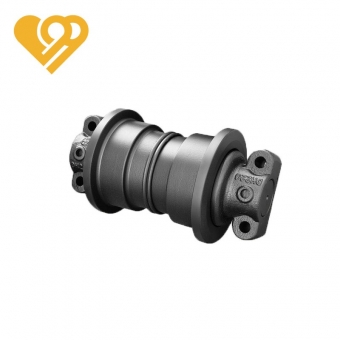
For buyers sourcing excavator track rollers and related undercarriage components, it is useful to provide information about the existing chain, sprocket, and track frame when requesting a replacement. This allows the supplier to assess the application more thoroughly.
Correct dimensions do not always guarantee that a component is suitable for every application. Excavators operating in quarrying, mining, demolition, muddy ground, or general earthmoving may experience different loads, impact levels, and wear patterns.
When comparing replacement parts, consider the following factors:
These factors help buyers evaluate whether a replacement is suitable for the intended operating conditions. They should not be used as substitutes for confirming the correct machine application and installation dimensions.
YINTPARTS supplies excavator sprockets and segments designed for crawler equipment applications. Buyers can discuss the machine model, operating conditions, and relevant specifications with the supplier when comparing available options.
Technical drawings are particularly useful when sourcing aftermarket excavator undercarriage parts. They allow buyers to compare critical dimensions and mounting details rather than relying solely on product photographs or general descriptions.
Before approving a replacement, compare the following information where applicable:
For components with complex mounting arrangements, request a dimensioned drawing or a supplier's compatibility confirmation. If your equipment has a non-standard configuration, a sample, technical drawing, or clear photographs with measurements can help the manufacturer assess whether a suitable replacement can be produced.
YINTPARTS states that it can manufacture excavator and bulldozer parts according to customer samples, designs, or technical drawings. You can explore the YINTPARTS product categories to identify the relevant component family before submitting your specifications.
Several common purchasing mistakes can cause an otherwise suitable-looking replacement to fail the compatibility check.
A more reliable purchasing process combines machine identification, part-number verification, dimensional checks, and supplier confirmation. These steps reduce avoidable ordering errors and help maintenance teams plan replacement work more efficiently.
When requesting a quotation from YINTPARTS, providing complete technical information can make the compatibility review more efficient. Instead of sending only a product name, prepare a clear description of the machine and the component that needs replacement.
Include the following details in your inquiry:
If the part number cannot be identified, explain which dimensions have been measured and whether the original component is available for inspection. Ask the supplier to confirm the proposed fitment before production or shipment.
As a manufacturer of excavator and bulldozer undercarriage components, YINTPARTS offers a range of parts for crawler equipment applications. Visit the undercarriage spare parts range to review available product categories, or contact the team through the YINTPARTS website to discuss your specific requirements.
Final recommendation: The most reliable way to verify excavator undercarriage part compatibility is to match the machine model and serial number, verify the part number, measure critical dimensions, inspect related components, and obtain confirmation from the supplier. Do not approve a replacement based on appearance alone.
How can I verify excavator undercarriage part compatibility?
Check the excavator model, serial number, OEM part number, installation dimensions, and technical specifications. Also verify that the replacement is compatible with related components such as the track chain, sprocket, idler, and rollers.
Can I order excavator undercarriage parts using only the machine model?
The machine model is a useful starting point, but it may not be sufficient. Production series, serial number ranges, and undercarriage modifications can affect compatibility. Confirm the part number and dimensions before ordering.
What should I do if the original part number is missing?
Provide the supplier with the machine serial number, component photographs, accurate measurements, and any available technical drawings. The supplier can use this information to identify potential replacement options and verify the application.
How do I check whether an excavator track chain and sprocket are compatible?
Compare the track pitch, sprocket tooth profile, chain configuration, and relevant installation dimensions. Also inspect the wear condition of both components. Matching the tooth count alone does not establish compatibility.
Are aftermarket excavator undercarriage parts interchangeable with OEM parts?
Some aftermarket parts are designed as replacements for specific OEM applications, but interchangeability must be confirmed for each part. Verify dimensions, mounting details, machine fitment, and applicable technical specifications rather than assuming that all aftermarket parts will fit.
What information should I send to an undercarriage parts supplier?
Provide the machine brand and model, serial number, original part number if available, required quantity, component dimensions, photographs, and operating conditions. A technical drawing or sample can be especially helpful when the original reference is unavailable.
get latest company news
Xiamen Yintai Machinery Co., Ltd


 ipv6 network supported
 sales & support 8613696958576
 Email : binochen@yintparts.com